Blog
- Home
- Blog
China Best Integrated Solar LED Street Light Suppliers?
Choosing a dependable supplier in China takes more than comparing prices and polished catalog photos. An Integrated Solar Led Street Light combines a solar panel, battery, LED fixture, controller, and pole into one outdoor lighting system. Each part affects performance. A bright lamp can still disappoint if its battery is undersized or its panel receives too much shade.
This guide explores how to assess Chinese suppliers, compare product specifications, and ask useful questions before requesting a quotation. Check the battery chemistry and capacity, panel wattage, LED output, lighting schedule, and stated autonomy during cloudy weather. Ask for test reports and clear warranty terms, then confirm what those terms cover. Small details matter. Cable entries, seals, mounting hardware, and corrosion protection can influence how a fixture handles rain, heat, dust, and coastal air.
Supplier visits, product samples, and customer references may help verify claims, though no single check guarantees long-term performance. Ask whether specifications apply to the exact model being quoted. Request photographs or videos of production and quality checks when an in-person visit is impractical. Compare the same configuration across suppliers, including shipping, spare parts, and after-sales support. A low price may reflect a different battery, shorter warranty, or fewer included components; clarify before drawing conclusions. Some product descriptions remain vague, and that deserves a follow-up question. The sections ahead offer a practical framework for evaluating suppliers and selecting a system suited to the installation site, budget, and maintenance plan.
What Is an Integrated Solar LED Street Light?
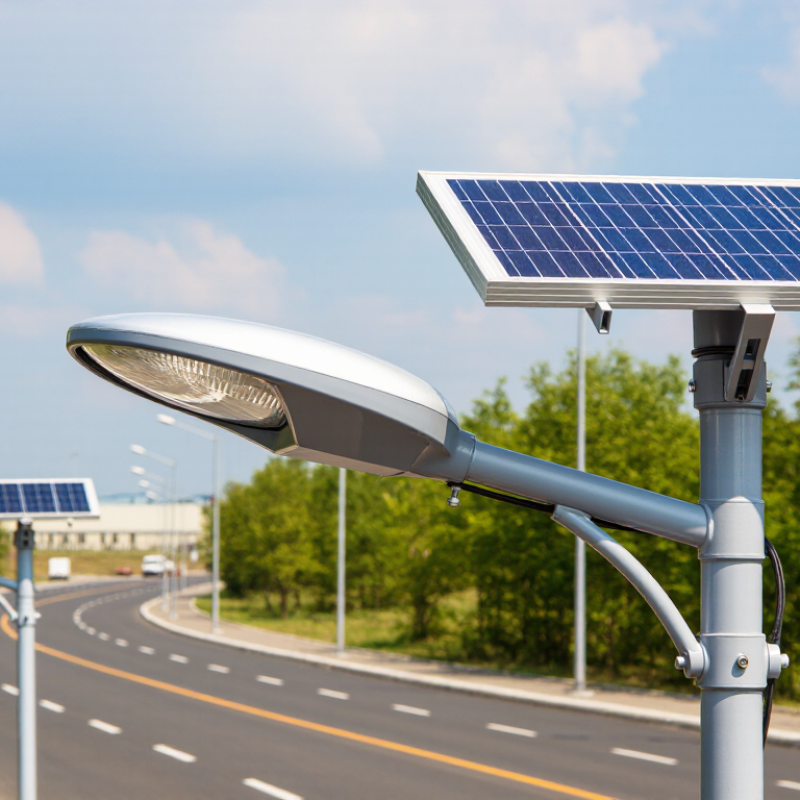
An integrated solar LED street light combines a photovoltaic panel, battery, LED lamp, and controller in one fixture. The unit usually mounts on a pole, with the panel facing the sun. During daylight, the panel converts sunlight into electricity and charges the battery. After dusk, a light sensor and controller switch on the LED. The controller can also adjust brightness to conserve stored power. No underground power cable is needed, which can simplify installation in parks, rural roads, and parking areas. Compact does not always mean simple: battery capacity, panel size, and local sunlight still determine how reliably the lamp performs.
Tips: Check the fixture’s rated operating hours and battery autonomy, especially for cloudy seasons. Compare those figures with the site’s night length and expected lighting needs. A shaded panel can reduce charging, even when the lamp itself is well positioned. Keep the panel surface clean, and inspect connections periodically. Ask how the battery can be accessed or replaced. One detail is easy to overlook: a bright lamp may not stay bright all night if its settings use energy too quickly. Test performance on-site when possible.
How to Evaluate Solar Street Light Suppliers in China
China Best Integrated Solar LED Street Light Suppliers?
How to Evaluate Solar Street Light Suppliers in China
Choosing a supplier means checking the complete system, not just the LED wattage. Ask for the panel rating, battery chemistry and capacity, controller settings, and measured luminaire output. Request test reports for water and dust resistance, plus battery cycle data. A high lumen claim means little without the test method. Check how the supplier sizes systems for winter sunlight and several consecutive cloudy nights.
Market data offers context, not a quality guarantee. IEA PVPS reported that global installed solar capacity exceeded 1.6 terawatts by the end of 2023, with about 447 gigawatts added that year. That scale can support a broad component supply chain, but it does not verify any factory’s production controls. Ask to inspect sample units, serial-number traceability, and actual aging-test records.
IRENA’s Renewable Power Generation Costs in 2023 reported a 12% decline in global utility-scale solar PV’s weighted-average electricity cost from 2022. This is not a streetlight price benchmark. It does remind buyers to compare lifecycle costs, including battery replacement and service access. A specification sheet can look convincing; it may still miss a cloudy week. Run a small pilot at the intended pole height, record nightly dimming and morning battery status, then compare results with the supplier’s promised autonomy.
Key Features to Compare Across Supplier Offerings
When comparing integrated solar LED street light suppliers, look beyond total wattage. Check the LED’s delivered lumens, beam distribution, color temperature, and dimming schedule. The U.S. Department of Energy reports that LEDs use at least 75% less energy than incandescent lighting, but that broad comparison does not prove one street-light design is better. Ask suppliers for test reports and photometric files for the exact fixture. A bright center with dark pavement around it is still poor lighting.
Battery capacity and solar-panel output need to match local sunlight, operating hours, and cloudy-day autonomy. Request the sizing assumptions, usable battery capacity, charge-controller protections, and performance data at low temperatures. Also compare ingress protection, corrosion resistance, replacement access, and warranty exclusions. The IEA PVPS Snapshot 2024 reports that global solar PV capacity exceeded 1.6 terawatts by the end of 2023. That scale signals a mature technology market, not guaranteed quality in a complete street-light system. A datasheet can still hide a weak design.
Tips: Ask for a sample unit and a site-specific lighting simulation. Check whether the quoted autonomy assumes a fully charged battery and ideal weather. Small details matter. Then confirm the supplier’s test methods, spare-part availability, and written warranty terms before comparing prices.
China Best Integrated Solar LED Street Light Suppliers? — Key Features to Compare Across Supplier Offerings
Use this matrix to compare common integrated solar street-light configurations. The profiles below are illustrative specification bands, not named suppliers or ranked products; actual specifications depend on the model, operating conditions, and project requirements.
| Feature to Compare | Compact / Lower-Power Offer | Balanced General-Purpose Offer | Higher-Capacity Offer |
|---|---|---|---|
| Typical application | Paths, small residential roads, and low-traffic areas | Local roads, campuses, and residential streets | Wider roads or locations with higher illumination requirements |
| LED rated power | Approximately 20–40 W | Approximately 40–80 W | Approximately 80–150 W |
| Solar panel rating | Approximately 60–120 Wp | Approximately 120–200 Wp | Approximately 200–300 Wp |
| Battery type and capacity | LiFePO₄ battery, commonly around 0.4–0.8 kWh | LiFePO₄ battery, commonly around 0.8–1.5 kWh | LiFePO₄ battery, commonly around 1.5–2.5 kWh |
| LED efficacy | Compare the luminaire’s delivered lumens per watt and test conditions. A product-level figure around 120–170 lm/W is a common specification range; confirm whether the figure refers to the LED package or the complete luminaire. | ||
| Autonomy without adequate charging | Often specified for about 1–2 nights | Often specified for about 2–3 nights | Often specified for about 3–5 nights |
| Control and dimming | Photocell or dusk-to-dawn control; basic dimming may be available | Dusk-to-dawn control with programmable time-based dimming | Programmable dimming; optional remote monitoring or motion-based control |
| Ingress protection | Look for a documented IP rating for the complete luminaire, typically IP65 or higher | IP65 or IP66 is commonly specified; check that the rating applies to the assembled product | IP65 or IP66 is commonly specified; verify seals, connectors, and installation conditions |
| Corrosion protection | Check housing material, coating, and any stated corrosion-test results | Ask for coating details and test documentation appropriate to the installation environment | For coastal or industrial locations, request evidence of suitable corrosion resistance |
| Typical mounting height | Approximately 4–6 m | Approximately 6–8 m | Approximately 8–12 m; confirm pole design and photometric layout |
| Light color | Common options include warm white (about 3000 K), neutral white (about 4000 K), and cool white (about 5000–6500 K). Select color temperature based on the project specification and local requirements. | ||
| Photometric information | Request an IES or equivalent photometric file and a project-specific lighting calculation. LED wattage alone does not establish road illuminance or uniformity. | ||
| Operating temperature | Confirm the specified ambient-temperature range and battery charging limits. Battery performance and charging behavior vary with temperature and product design. | ||
| Warranty and service | Compare the written warranty period and its separate coverage for the luminaire, battery, solar panel, and controller. Also confirm spare-part availability and warranty exclusions. | ||
| Compliance documents | Request applicable test reports and certificates for the destination market, and verify their scope, model numbers, issuing laboratory, and validity independently. | ||
| Wind and structural suitability | Ask for the luminaire’s wind-load information and ensure the pole, bracket, foundation, and local wind design requirements are assessed as a complete installation. | ||
| Supplier checks before ordering | Request a detailed bill of materials, battery and panel datasheets, photometric files, sample inspection, packaging details, production lead time, and a written commissioning or installation guide. | ||
Note: Solar-panel watt-peak ratings, battery energy, autonomy, runtime, and lighting performance are not directly interchangeable across products. Request the calculation assumptions, including site solar resource, operating hours, dimming schedule, and consecutive low-sun days.
How to Verify Supplier Quality and Certifications
For China’s integrated solar LED street light suppliers, quality checks should go beyond polished product photos. Ask for test reports that identify the exact model, battery chemistry, panel rating, LED power, and controller. The report should match the configuration you plan to buy; a similar model is not enough. Check who issued the document and confirm its validity directly with the issuing laboratory or certification body. A clean PDF is not proof. Certification requirements also vary by destination, so confirm which standards apply to your project.
Tips: Request the certificate number and full report, not just a logo on a brochure. Compare model codes, dates, and test conditions. Ask whether testing covered the complete light or separate components. Then inspect a sample: wiring should be secured, seals evenly fitted, and the battery compartment accessible without forcing the cover.
A reliable supplier can explain test results in plain language and provide traceable production records. Ask how incoming batteries and LED modules are checked, and what happens when a batch fails inspection. If possible, arrange an independent factory audit or pre-shipment inspection. Small inconsistencies matter. A label may list a battery capacity that differs from the report, or a certificate may cover an older design. It is easy to overlook these details when timelines are tight, and even a careful review cannot remove every risk.
Steps for Selecting and Sourcing a Suitable Supplier
Choosing an integrated solar LED street light supplier starts with the site, not the catalogue. IEA PVPS’s Trends 2024 report estimated 447 GW of new solar PV capacity in 2023, bringing global installed capacity to about 1.6 TW. That growth makes careful supplier checks more important, not less. Share the project’s location, nightly operating hours, pole height, and shading conditions. Ask suppliers to show how panel size, battery capacity, and light output match those details. Numbers matter. Request independent photometric test data, battery cycle-life results, and clear operating-temperature limits. A bright product photo proves little.
Compare the full system, including the controller, enclosure, cabling, and mounting hardware. Check the warranty terms for battery replacement, water ingress, and reduced capacity. Ask for a bill of materials and traceable test records; vague “high efficiency” claims are not enough. Where possible, inspect a sample in daylight and after a full night’s operation. Test the details. A small pilot across one or two sites can reveal dimming problems or poor winter performance before a larger order. I would not treat a polished sample as proof; that shortcut is tempting, but weak. Record the agreed settings, delivery schedule, spare-parts plan, and acceptance checks in writing.