Blog

China Top 10 Green Energy Solar Panel Manufacturers

China has become a major force in solar manufacturing, with companies supplying panels for homes, commercial rooftops, and utility-scale projects. This guide to China’s top 10 Green Energy Solar panel manufacturers introduces brands worth examining, while recognizing that “top” can mean different things. Production capacity, product range, service, and a buyer’s location all affect the right choice.

A manufacturer’s name alone is not enough. Check panel specifications, applicable certifications, warranty terms, and the availability of local technical support. Compare real product documents, not only promotional claims. For project buyers, delivery schedules and communication matter too; a strong datasheet cannot install itself. That matters.

The companies featured here represent a starting point for research, not a universal ranking or an endorsement. Manufacturing portfolios and market conditions change, so confirm current details directly with each supplier. It is also worth asking how performance is tested and what support is available after installation. Some information may be difficult to compare fairly, especially when companies report capacity or performance differently. That is a limitation, and readers should keep it in view. The sections ahead outline what distinguishes these manufacturers and which practical questions can help narrow a shortlist.
China Top 10 Green Energy Solar Panel Manufacturers

China’s Green Energy Solar Manufacturing Landscape

China’s green energy solar manufacturing landscape is built around a connected supply chain. It includes silicon processing, wafer cutting, cell production, module assembly, and supporting equipment. A panel may pass through several specialized facilities before shipment. At each stage, cleanliness, temperature control, and material consistency affect output. Tiny defects matter.

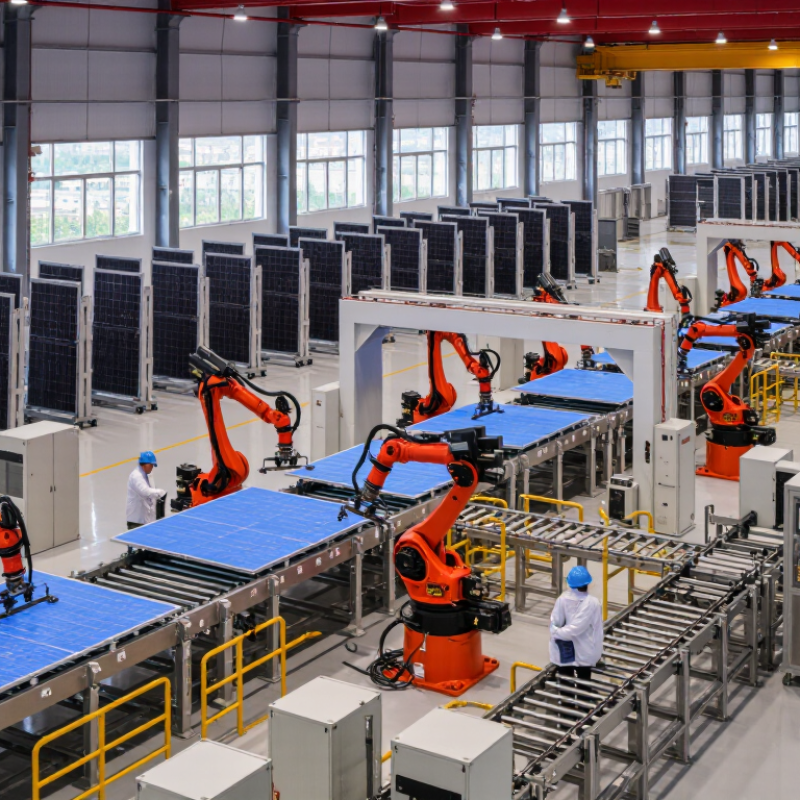
Manufacturing scale can help suppliers secure materials and invest in automated inspection. In a modern production line, cameras check cell surfaces while electrical tests measure panel performance. Yet factory capacity alone does not prove quality. Buyers also need clear product specifications, traceable test records, and independent verification where available. These details make comparisons more useful than headline production figures.

The landscape is changing as manufacturers work to improve efficiency and reduce waste. Recycling silicon scraps and managing water use are practical priorities, though progress can vary between facilities. A low-cost panel may look attractive on paper, but long-term performance depends on installation, climate, and maintenance. The numbers can be imperfect, too; public data may describe planned capacity rather than actual output. That distinction deserves attention.

Criteria for Selecting the Top 10 Manufacturers

Selecting China’s leading green-energy solar panel manufacturers calls for evidence beyond factory size or advertised cell efficiency. The International Energy Agency’s 2022 report, Solar PV Global Supply Chains, found that China held more than 80% of global manufacturing capacity across key solar-panel production stages. That concentration makes supply-chain depth relevant, but it does not prove that any individual factory delivers consistent quality. Check production traceability, independent test results, shipment records, and the ability to maintain output during material shortages. Small details matter: inspect how clearly a supplier explains cell origin, module tolerances, and warranty exclusions.

Product performance should be judged using independently verified efficiency, degradation rates, temperature behavior, and long-term field data. IRENA reported that the global weighted-average cost of newly commissioned utility-scale solar PV fell 12% in 2023, to $0.044 per kilowatt-hour. Lower costs increase the value of dependable performance over a panel’s service life. Review financial stability and warranty provisions, too; a long warranty is less persuasive if claims handling is unclear. No scorecard is perfect. Public data can be patchy, and factory capacity figures may not reflect actual utilization. I would compare documented results across several years, rather than rely on one impressive audit or a polished product sheet.

China Top 10 Green Energy Solar Panel Manufacturers – Criteria for Selecting the Top 10 Manufacturers

Use this 100-point framework to compare solar panel manufacturers. It defines selection criteria and verification methods; it does not represent a ranking or make claims about any specific manufacturer.

No. Selection criterion Weight How to evaluate Evidence to verify
1 Product certification and safety 15 points Confirm that relevant panel models have current, applicable design-qualification and safety certifications for the intended market. Check model numbers, certificate scope, issuing body, and validity. Certificate records and model lists; applicable IEC 61215 and IEC 61730 documentation; market-specific compliance records where required.
2 Module performance 15 points Compare independently verified module efficiency, rated power, temperature coefficient, and performance under the same test conditions. Use current product data rather than company-wide averages. Product datasheets, test reports, and model-specific flash-test or factory inspection records. Check test conditions and measurement tolerances.
3 Durability and warranty terms 15 points Assess the stated product and power-performance warranty terms, degradation schedule, exclusions, claim process, and the manufacturer’s ability to support warranty obligations. Written warranty documents, product specifications, degradation test reports, and records of warranty-service arrangements.
4 Manufacturing capability 12 points Evaluate operating production lines, process controls, yield and defect monitoring, capacity utilization, and the ability to deliver the required product specification and volume. Factory audit, line and process records, production-capacity documentation, quality-control procedures, and shipment records. Distinguish operating capacity from announced capacity.
5 Quality management and traceability 10 points Review the documented quality-management system, incoming-material controls, in-process inspections, final testing, corrective actions, and traceability from materials to finished modules. Current quality-system certificates, audit findings, inspection records, serial-number traceability demonstrations, and corrective-action records.
6 Environmental performance 10 points Assess documented energy and resource use, emissions management, waste handling, restricted-substance controls, and end-of-life or recycling information. Compare data using consistent boundaries and methods. Environmental-management documentation, verified environmental product declarations or lifecycle assessments where available, emissions data, and waste-management records.
7 Supply-chain transparency 8 points Check the ability to identify key material and component sources, manage supplier quality, monitor supply-chain risks, and provide shipment-specific documentation required by the buyer or destination market. Supplier assessment procedures, material declarations, chain-of-custody records where applicable, and shipment documentation.
8 Research and product development 5 points Review documented product-development capability, test facilities, engineering resources, and the process for validating design changes before commercial production. Facility and process records, test reports, product-change controls, and verifiable technical documentation.
9 Delivery and after-sales support 5 points Assess delivery performance, technical response procedures, availability of installation and product documentation, and the process for handling product issues and warranty claims. Delivery records, support procedures, service-level documentation, product manuals, and anonymized claim-response records.
10 Financial and business continuity 5 points Evaluate the manufacturer’s ability to sustain operations, maintain service and warranty support, and meet contractual commitments. Apply the same review period and financial measures to all candidates. Audited financial statements where available, credit assessments, business-continuity plans, and evidence of warranty-support arrangements.
Total weighting 100 points Score each criterion using consistent, independently verifiable evidence before comparing candidates.

Assessment note: The weightings are a suggested evaluation framework, not an industry standard. Confirm certificate validity, product-model coverage, test conditions, and document dates during due diligence.

Profiles of 10 Leading Chinese Solar Panel Manufacturers

China’s solar supply chain combines scale with rapid technology shifts. The IEA’s 2022 report on solar PV supply chains estimated that China held more than 80% of global manufacturing capacity across key production stages. The following profiles highlight ten distinct strengths found among leading manufacturers; they are not a fixed ranking.

One profile is a vertically integrated producer, controlling steps from wafers to finished modules. Another specializes in TOPCon cells, aiming for higher output from limited roof space. A third develops heterojunction panels, which can perform well in hot conditions. A fourth pursues back-contact designs to reduce front-side shading. A fifth focuses on wafer and cell production for other suppliers. A sixth builds large-format modules for utility-scale projects. A seventh targets rooftop installations with lighter, compact products. An eighth emphasizes export logistics and traceable supply chains. A ninth adjusts production across regional facilities to meet changing demand. A tenth invests in lower-carbon manufacturing and material recovery. Details matter.

These profiles differ in more than cell architecture. Buyers should compare independently verified power ratings, degradation warranties, temperature coefficients, and delivery records. Factory audits can reveal practical issues, such as inconsistent labeling or uneven quality checks. Public disclosures also vary, so comparisons are not always straightforward. High efficiency helps, but it cannot replace reliable testing and clear service commitments.

China’s Share of Global Solar PV Manufacturing Capacity

China held a leading share of global manufacturing capacity across the solar PV supply chain in 2021. These figures describe national capacity by production stage, not the output or market share of individual manufacturers.

Source: International Energy Agency, Solar PV Global Supply Chains (2022).

Comparing Product Technologies and Manufacturing Scale

Comparing China’s leading solar panel manufacturers requires more than counting factory output. Product technology matters at the module level. A buyer may compare PERC, TOPCon, and heterojunction cells for efficiency, temperature behavior, and performance in low light. Bifacial modules can capture reflected light from pale rooftops or open ground, but their advantage depends on installation conditions. A datasheet is only a starting point.

Scale needs careful reading. Annual capacity, actual production, and shipment volume are different measures. Large automated lines can support consistent output, while quality checks should cover cell cracks, lamination, and electrical performance. Ask how manufacturers track batch results and handle warranty claims. Details matter. Factory size alone does not prove reliability. Some published figures may also describe planned capacity rather than modules already rolling off a line.

A practical comparison should match technology to the project. Hot climates, limited roof space, and utility-scale sites create different priorities. Review independent test data where available, and check whether specifications apply to the exact module model. Even then, comparisons are imperfect: testing conditions may not mirror a dusty roof or a windy field. That caveat is easy to overlook.

China’s Solar Panel Market and Global Role

China’s solar panel market has become a major force in global clean-energy supply. Its manufacturing network spans key stages, from processed materials and solar cells to finished modules. This scale can support large projects and make panels more widely available. It also connects overseas buyers to a broad range of product specifications and production volumes.

Market strength does not remove practical trade-offs. Panel prices are only one part of a project’s cost; shipping, mounting systems, inverters, and local installation all matter. Buyers should compare verified performance data, warranty terms, and supplier quality controls, rather than relying on headline efficiency alone. A panel’s output can also vary with heat, shade, and installation angle. The supply chain is impressive, but it is not flawless; delivery schedules and material costs can shift, and planning around that uncertainty deserves more attention.

Tips: Check that test reports match the exact panel model. Ask about degradation rates and warranty coverage. Compare delivered costs, not just factory prices. Keep a record of serial numbers and installation conditions.