Blog

How to Choose an On Grid Solar System in 2026?

Choosing an On Grid Solar System in 2026 is less about buying the biggest panel array and more about matching equipment to your home, local grid, and electricity plan. IRENA’s Renewable Capacity Statistics 2024 recorded 1,419 GW of installed solar capacity worldwide at the end of 2023, with 345.5 GW added that year. The market is expanding quickly. But global growth does not tell you how much a shaded roof can produce.

Start with practical details: recent electricity bills, daytime energy use, roof direction, and nearby shade. Check your utility’s rules for grid connection and exported electricity before comparing quotes. Ask installers to state the panel and inverter models, estimated annual production, and assumptions behind their calculations. Small details matter. A system sized around annual consumption may still leave you buying power at costly evening rates.

The IEA’s Renewables 2024 report projects that solar PV will provide about 80% of global renewable capacity growth through 2030. That broader trend makes product choice more important, not simpler. Compare warranties, monitoring tools, installer experience, and service response—not just the quoted price. No battery by default. Grid-connected systems commonly operate without storage, but local outage behavior and backup needs deserve a direct conversation. A perfect estimate is unlikely; shade changes, household habits shift, and forecasts can miss. Treat every production estimate as an informed projection, then check whether its assumptions fit your roof and routine.
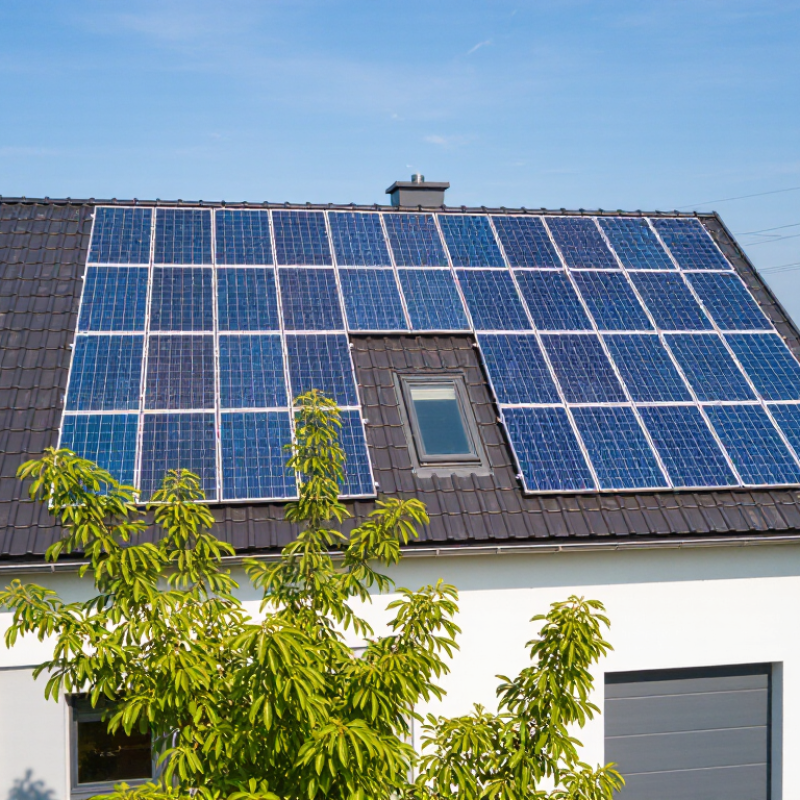
How to Choose an On Grid Solar System in 2026?

Understanding How an On-Grid Solar System Works

An on-grid solar system connects rooftop panels to your home and the public electricity network. Panels produce direct-current (DC) electricity; an inverter converts it into alternating current (AC) for household appliances. The inverter also synchronizes output with the grid. Simple, but not magic. A qualified installer should assess roof direction, shading, wiring, and connection requirements before sizing the system.

During sunny hours, your home uses solar power, while surplus electricity may flow to the grid, depending on local utility rules and metering arrangements. At night, or when demand exceeds production, the home draws electricity from the grid. Most standard grid-tied systems shut down during a blackout to avoid sending power onto lines that crews may be repairing. Backup power usually requires compatible batteries and islanding controls. A single sunny afternoon is a poor sizing guide; it is an easy mistake to make.

Tips: Review twelve months of electricity bills and note seasonal changes in usage. Ask how shading, export limits, and outages affect the proposed system. Check the assumptions carefully; estimates can vary.

Assessing Your Electricity Use and Rooftop Conditions

Before sizing an on-grid solar system, gather twelve months of electricity bills and note monthly kilowatt-hour use, not just the highest bill. The U.S. Energy Information Administration reported average residential electricity use of 10,791 kWh per customer in 2022. That is a national benchmark, not a household target. Air conditioning, electric vehicles, and seasonal heating can shift a home far from the average. Check daytime use, too: solar production may peak while the house is empty.

The roof deserves an equally careful check. Record its usable area, direction, pitch, and any shade from chimneys, trees, or neighboring buildings. A small shadow can matter. The National Renewable Energy Laboratory’s PVWatts tool estimates output using location, tilt, azimuth, and system losses; its default loss assumption is 14 percent. Treat that as a modeling input, not a promise for every roof. A branch that shades panels each afternoon may make the estimate too optimistic unless the shade is represented accurately.

Look for roof repairs likely within the system’s expected service life, and ask a qualified installer to assess the structure and shading on site. Measurements from an app can miss roof obstructions. So can a quick glance. Compare estimated annual production with your actual use, while checking month-by-month differences; grid-connected systems may still draw electricity at night or during cloudy periods. One imperfect detail: future consumption is hard to predict, especially if a heat pump or EV is planned. Use scenarios, and revisit the estimate before committing.

Sizing the System for Your Energy Needs

Sizing an on-grid solar system starts with your electricity use, not the roof’s maximum panel count. Check 12 months of utility bills and note monthly kilowatt-hours, especially summer air-conditioning or winter heating peaks. A home using 8,000 kWh a year needs a different design from one using the same amount mostly at night. Timing matters. Compare hourly consumption, if your utility provides it, with the hours your roof receives useful sun. Panels facing different directions, nearby trees, and seasonal shade can change expected output.

A rough starting point is annual consumption divided by the local system’s estimated annual yield per kilowatt. Treat that as a planning estimate, not a promised production figure. A qualified installer can account for roof angle, shading, equipment losses, and local weather using site-specific data. Ask to see the assumptions behind the estimate. Utility export credits and interconnection rules also affect how much energy is worth sending to the grid, and these vary by location. Leave room for realistic changes, such as an electric vehicle or heat pump, but avoid sizing for every imagined future need. Forecasts are imperfect; even a careful model cannot capture every cloudy week or change in household habits. A modest buffer may be sensible, provided the roof and utility arrangement support it.

Comparing Panels, Inverters, and System Features

When comparing panels, look beyond peak wattage. Measure the usable roof area, including space lost around vents and edges. Higher-efficiency modules can help on a small roof, but their value depends on price and fit. Check temperature coefficients, product warranties, and expected degradation. NREL’s review by Jordan and Kurtz found a median panel degradation rate near 0.5% per year. It is a broad historical result, not a prediction for every product. Real roofs are less tidy than spreadsheets.

The inverter shapes how the array handles shade and equipment faults. String inverters can be simpler to inspect, while module-level electronics may help when shade varies across the roof. Neither option wins in every layout. NREL’s PVWatts model uses 96% as its default inverter efficiency; treat that as a modeling assumption, not a guaranteed field result. Ask for modeled annual energy, clipping estimates, and the assumptions behind them. Check monitoring detail, service access, and replacement costs, too. Small print matters. A grid-tied system without backup typically shuts down during a grid outage, even in sunshine. If outages matter, confirm whether storage and safe backup operation are included.

Checking Grid Rules, Costs, and Installer Credentials

How to Choose an On Grid Solar System in 2026?

Before comparing system sizes, check your electricity provider’s grid connection rules. Some networks limit how much power a home can export, while others require approval before installation. Ask whether your meter needs an upgrade and how export credits appear on your bill. These details can change the value of a system. Rules vary by location, so confirm them directly with your utility and local authority.

Tips: Get itemized quotes. Compare panels, inverter, mounting, permits, and electrical work separately. Ask for a savings estimate that states its assumptions, including your energy use, local rates, and export limits. Check whether future rate changes could affect the forecast. A tidy spreadsheet can still be wrong.

Check the installer’s credentials before signing. Verify relevant licenses, insurance, and experience with grid-connected systems in your area. Request references and ask who handles inspections, utility paperwork, and system commissioning. Read warranties closely, especially coverage for labor and inverter replacement. Don’t rush this part. A low quote may exclude essential work, but the highest price is not proof of better service. Ask for answers in writing, and compare the same system specifications across quotes.

How to Choose an On-Grid Solar System in 2026

Compare estimated solar production with a household-use reference. The solar figures are calculated examples for a 6 kW system—not a site-specific production forecast.

How to use this: The household-use reference is 10,791 kWh per year (U.S. Energy Information Administration, 2022). The three solar scenarios use 1,000, 1,300, and 1,600 kWh per installed kW per year, multiplied by 6 kW. Ask an installer to replace these illustrative yields with an address-specific estimate, such as an NREL PVWatts calculation. Before signing, confirm your utility’s interconnection process and export-compensation rules, compare itemized installed costs, and verify the contractor’s required local license and insurance. NABCEP certification is an additional credential to check, not a substitute for required licensing.

Sources and method: EIA, “How much electricity does an American home use?” (2022 annual average); solar scenarios are arithmetic estimates based on the assumptions stated above. Utility rules, costs, and licensing requirements vary by location.