How to Choose the Best Residential Solar Panels for Your Home?
Choosing the best residential solar panels for your home can seem overwhelming. As Mark Johnson, a solar energy expert, once stated, "The right solar panels can turn your roof into a powerhouse." This quote emphasizes the potential of residential solar panels to transform energy consumption.
When considering residential solar panels, several factors come into play. Efficiency, warranty, and cost are crucial. You want panels that not only fit your budget but also provide long-lasting performance. The variety on the market can lead to confusion. It’s essential to research your options carefully.
Many homeowners overlook key details. For instance, the installation process varies by provider. It’s easy to assume all panels are the same. However, small differences can significantly impact energy output. A hasty decision might lead to regrets later. Understanding your specific needs is vital. Investing time in research today can save money tomorrow.
Understanding Your Energy Needs for Solar Panel Selection
When considering solar panels for your home, understanding your energy needs is crucial. The average American household uses about 877 kWh per month. To effectively choose the right solar system, begin by evaluating your current energy usage. Look at your utility bills to gather this data. This step will provide a concrete foundation for your solar panel selection.
Tips: Calculate your average daily energy consumption. Divide your monthly kWh by 30. This figure helps determine the number of solar panels required. Additionally, consider factors like roof orientation, shading, and space availability. These elements deeply affect your energy generation potential.
Research shows that solar panels can reduce energy bills by up to 70%. However, be cautious. Choosing poorly matched panels can lead to less efficiency. Think about your future energy needs as well. Will you buy an electric vehicle? If so, plan for the additional energy demand accordingly.
Types of Residential Solar Panels: Monocrystalline vs. Polycrystalline
When choosing residential solar panels, understanding the types is crucial.
Monocrystalline and polycrystalline
panels are the two main options available.
Monocrystalline panels are made from a single crystal structure. They tend to be more efficient and take up less space.
This makes them ideal for homes with limited roof space. However, they can be pricier.
Polycrystalline panels, on the other hand, are made from multiple crystals.
This results in a less efficient solar conversion compared to their monocrystalline counterparts.
They usually occupy more space. But they are generally more affordable. Homeowners on a budget may find polycrystalline panels a good compromise.
It’s essential to consider your energy needs. Think about how much energy your home consumes monthly.
Will the roof provide enough sunlight exposure? These factors influence the choice between the two types.
Some may prioritize efficiency over cost, while others may take the opposite route.
Overall, both types have their pros and cons, and the right choice often varies from home to home.
Evaluating Your Roof’s Suitability for Solar Panel Installation
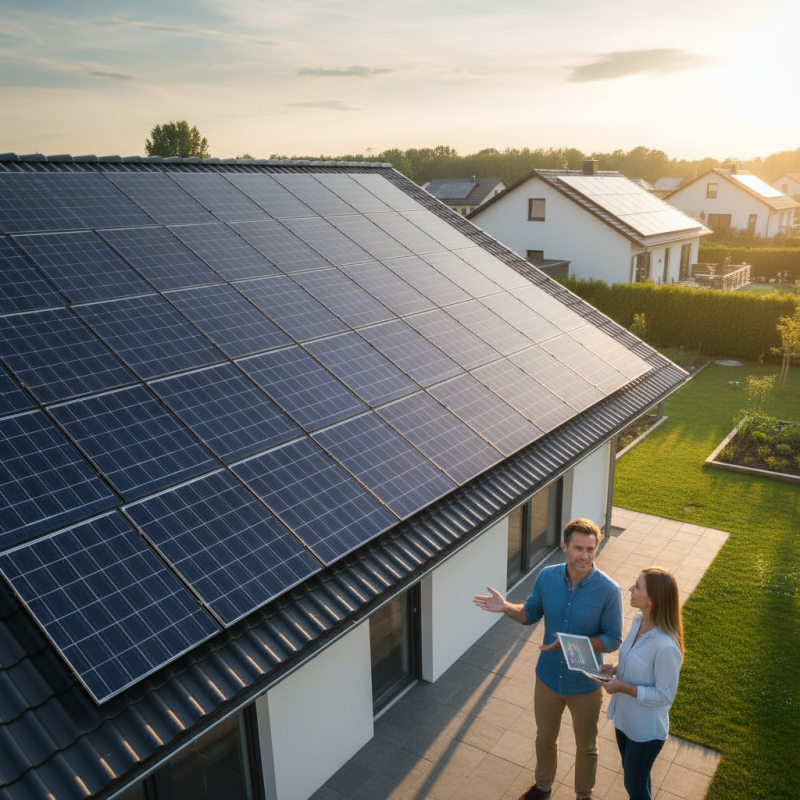
Evaluating your roof’s suitability for solar panel installation is crucial in the solar journey. Start by assessing the size of your roof. A larger roof can typically accommodate more panels. Think about the direction your roof faces. South-facing roofs often capture the most sunlight. Trees or buildings nearby can create shade, which reduces solar efficiency.
Check the condition of your roof too. Older roofs might need repairs before installation. Look for missing shingles or water damage. Sometimes, a new roof can be a worthwhile investment for future energy savings. Also, consider the angle of your roof. Flat roofs may require a different mounting system compared to sloped roofs.
Assessing these factors might feel overwhelming. You may overlook things like local weather patterns. For example, heavy snowfall could impact the efficiency of your solar panels. It's essential to think about these details carefully. Connecting with a professional who can assist in assessing your roof is often helpful. They can provide valuable insights that may not be obvious at first glance.
How to Choose the Best Residential Solar Panels for Your Home? - Evaluating Your Roof’s Suitability for Solar Panel Installation
| Criteria |
Considerations |
Evaluation |
| Roof Orientation |
Ideal orientations are south-facing, but east and west can also work. |
Assess sun exposure throughout the day. |
| Roof Pitch |
An angle of 30 to 45 degrees is optimal for solar energy collection. |
Measure the angle with a level tool. |
| Roof Condition |
Ensure the roof is structurally sound and not old or damaged. |
Check for moss, leaks, or other signs of wear. |
| Roof Size |
Ensure sufficient space for the panels to fit and maximize energy production. |
Calculate the available square footage. |
| Shading |
Minimize shading from nearby trees, buildings, or debris. |
Assess shadow impact at different times of the year. |
| Local Climate |
Consider average sunlight hours per day in your location. |
Research local weather patterns and solar generation potential. |
| Roof Type |
Different materials (asphalt, tile, metal) have varying installation requirements. |
Assess compatibility of solar mounting systems with roof type. |
Key Factors in Solar Panel Efficiency and Performance Ratings
When choosing solar panels, efficiency and performance ratings are crucial. Efficiency measures how effectively a panel converts sunlight into electricity. The average efficiency ranges from 15% to 22%. Higher efficiency means more energy production in limited space. But beware, high-efficiency panels often come with high costs.
Performance rating evaluates how panels perform under different conditions. Factors like temperature, shade, and humidity impact performance. A reliable performance rating includes metrics like temperature coefficient and PTC ratings. According to the National Renewable Energy Laboratory, a good temperature coefficient is around -0.4% per degree Celsius.
Tip: Look for panels with a balance between efficiency and cost. Sometimes lower-efficient panels can be more cost-effective in larger installations.
Remember, warranty and durability matter too. A 25-year warranty indicates longevity. Panels with robust materials perform better in extreme weather. Always check for certifications, and research long-term performance data.
Tip: Consult with experts to find the best fit for your energy needs. Performance can vary widely, so don't hesitate to ask questions.
Budgeting for Solar Panel Installation: Costs and Incentives
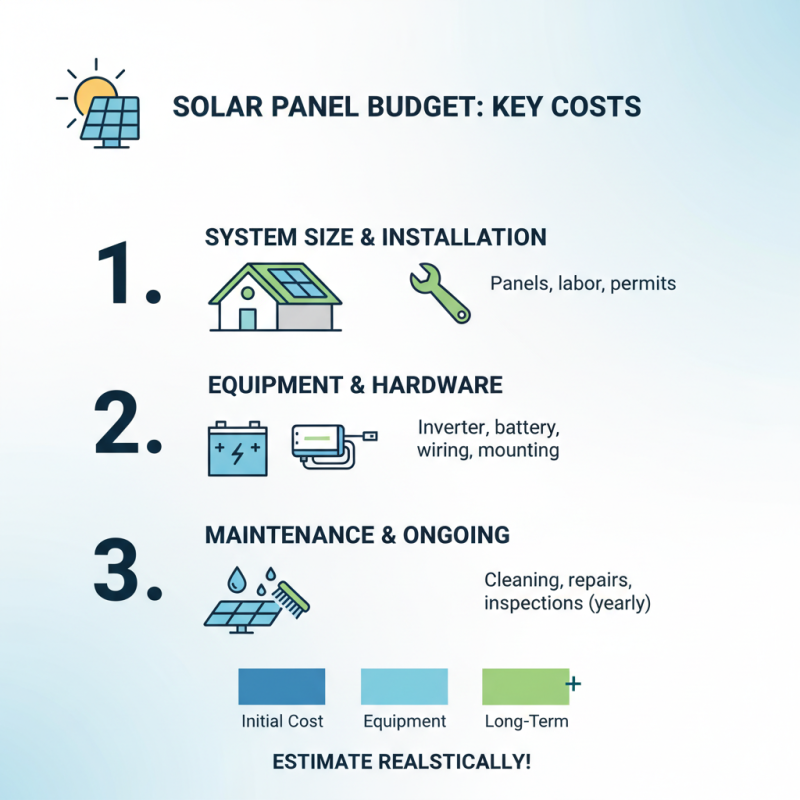
When considering solar panel installation, budgeting is crucial. Costs can vary widely. It is essential to estimate your total expenses realistically. Factors include system size, installation fees, and additional equipment. Many homeowners overlook maintenance costs. They can add up over time, so be aware.
Incentives play a significant role in making solar more affordable. Federal and state programs often provide tax credits. Rebates can reduce initial expenses. Some areas offer low-interest financing, easing the upfront payment burden. However, incentives differ. It’s vital to research your local options to maximize savings. Consider seeking local programs for guidance.
Unexpected challenges may arise during installation. Homeowners might face zoning restrictions or utility requirements. These factors can influence the overall budget. Planning for unforeseen circumstances is wise. Be prepared to adjust your budget as needed. A flexible approach helps manage costs effectively.