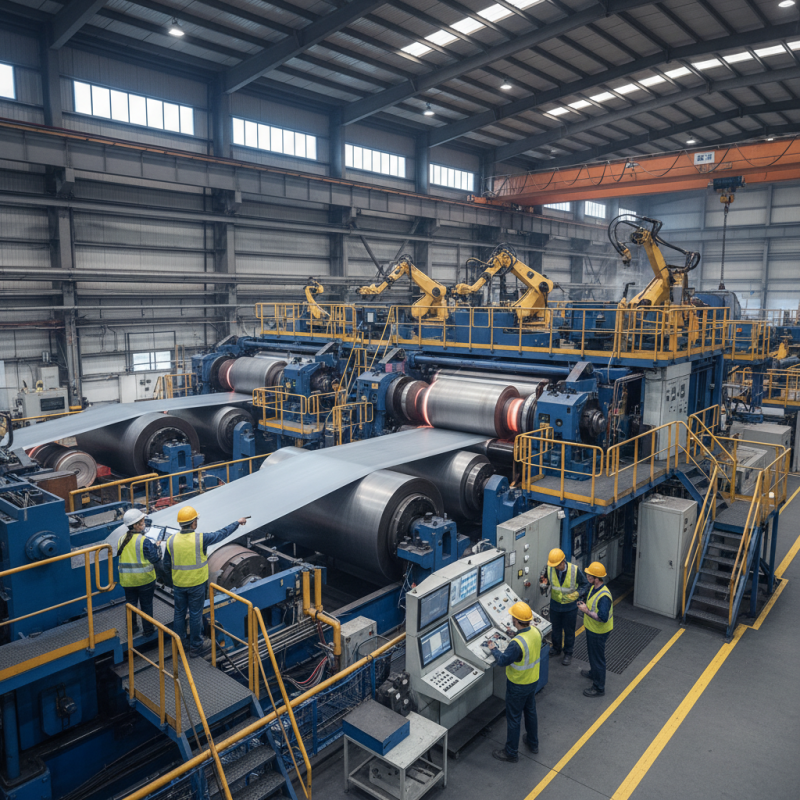
How to Optimize Tandem Cold Rolling Mill Efficiency?
The tandem cold rolling mill plays a crucial role in steel manufacturing. Optimizing its efficiency is vital for productivity and cost reduction. Many mills struggle with challenges like downtime and maintenance issues, which affect output.
Effective use of technology can improve performance. For instance, modern sensors and automation enhance monitoring capabilities. However, relying too much on technology can lead to oversights. Operators may miss critical manual checks. Attention to detail is essential in this process.
Regular training for staff is another key factor. Well-trained personnel can identify inefficiencies quickly. Many mills neglect this aspect, focusing solely on machinery upgrades. A balanced approach is necessary. Optimizing a tandem cold rolling mill requires both equipment and human resource considerations for sustainable success.
Understanding the Basics of Tandem Cold Rolling Mill Operations
Tandem cold rolling mills are crucial in metal processing. Understanding their operations is key to optimizing efficiency. These mills consist of several stands, each equipped with rolls that reduce metal thickness while enhancing surface quality. The process significantly impacts overall material yield.
According to industry reports, effective rolling can achieve up to 80% of the desired thickness in a single pass. However, inefficiencies often arise from improper roll alignment or inconsistent material feeding. A study showed that discrepancies in roll gap settings could reduce material yield by as much as 10%.
Regular maintenance and monitoring are vital. Data analytics tools can help detect performance dips or wear in components. Yet, many facilities overlook this, leading to unplanned downtime. Additionally, controlling temperature during rolling is critical. Unoptimized temperatures can lead to defects, affecting product quality. Continuous education and training of operators can close these knowledge gaps and enhance overall efficiency.
Key Factors Influencing Efficiency in Tandem Cold Rolling Mills
Tandem cold rolling mills are crucial for producing high-quality steel and metals. The efficiency of these mills hinges on several key factors. One major aspect is the roll gap control. Proper adjustment of the roll gap ensures optimal thickness and surface quality. If this gap is not managed correctly, variations can lead to defects and wasted material.
Another important factor is lubrication. The right lubrication minimizes friction and wear. Insufficient lubrication can result in increased energy consumption and overheating. Regular monitoring of lubrication systems is essential. Operators often overlook this aspect, but it is vital for maintaining efficiency.
Additionally, the mill's setup and maintenance play a role too. Regular inspections can reveal potential issues before they escalate. Delays in maintenance often lead to unplanned downtime, impacting throughput. Training personnel to handle machinery properly is also critical. Poor handling can cause avoidable errors during operations. It's a constant balancing act between efficiency and quality in tandem cold rolling mills.
Optimization of Tandem Cold Rolling Mill Efficiency
Techniques for Reducing Energy Consumption in Cold Rolling Processes
Reducing energy consumption in cold rolling processes is crucial for improving efficiency. One effective technique involves optimizing the rolling parameters. By adjusting the speed and tension during the process, mills can minimize energy usage. Smaller increments can lead to significant savings over time. Not all adjustments yield positive results, though. Continuous monitoring is necessary to ensure desired outcomes occur.
Another strategy is the implementation of heat recovery systems. Recovering waste heat can reduce the energy demands of reheating the material. These systems are not always cost-effective, and initial investments can be high. Regular maintenance is vital to keep these systems functioning correctly. If neglected, they might do more harm than good.
Utilizing advanced control systems can also help in energy reduction. These systems can analyze real-time data and adjust operations accordingly. However, the complexity of installation and training can pose challenges. Operators may struggle to adapt to new technologies. Emphasizing the importance of ongoing training could bridge this gap and improve efficiency in the long run.
How to Optimize Tandem Cold Rolling Mill Efficiency? - Techniques for Reducing Energy Consumption in Cold Rolling Processes
| Technique | Description | Energy Savings (%) | Implementation Cost ($) | Payback Period (months) |
| Advanced gearing systems | Upgrading to high-efficiency gear reducers | 15 | 15,000 | 12 |
| Heat recovery systems | Utilizing waste heat for preheating processes | 20 | 25,000 | 10 |
| Variable frequency drives | Installing VFDs for motor control optimization | 10 | 20,000 | 18 |
| Lubrication improvements | Switching to high-performance lubrication oils | 5 | 5,000 | 6 |
| Automation and monitoring | Implementing real-time monitoring systems | 25 | 30,000 | 15 |
Maintaining Equipment to Enhance Mill Performance and Longevity
In tandem cold rolling mills, maintaining equipment is crucial for optimizing performance and ensuring longevity. Regular inspections can prevent unexpected breakdowns. Research indicates that proactive maintenance can boost efficiency by up to 20%. It reduces downtime, which is essential for keeping production on schedule.
Tips: Schedule weekly inspections. Check lubrication levels and replace worn parts promptly.
Vibration analysis should be a standard practice. Detecting anomalies early can save costs. A study from industry experts found that predictive maintenance leads to 25% fewer repairs. This translates to significant savings over time.
Tips: Invest in training for your maintenance team. Knowledgeable staff can spot issues before they escalate.
Equipment failures often result from lack of attention to detail. A small oversight can lead to major issues. Keeping a detailed maintenance log allows for better tracking of equipment health. This data can help identify patterns and potential problems before they occur.
Tips: Encourage open communication among operators. They can provide valuable insights about equipment performance.
Implementing Automation and Control Systems for Optimal Results
Automation and control systems play a crucial role in optimizing tandem cold rolling mill efficiency. These systems monitor various parameters, ensuring real-time adjustments to the process. A consistent flow of data helps identify bottlenecks. However, challenges arise when integrating new technologies with existing equipment. Incompatibility can hinder performance. It's essential to assess current systems before implementing changes.
Smart sensors can drastically improve operational performance. They provide insights into temperature, pressure, and material thickness. By analyzing this data, operators can adjust the rolling process for optimal results. It's not always perfect, though. Sensors can malfunction or provide inaccurate readings, which may lead to costly errors. A balancing act of technology and human oversight is needed.
Training personnel to effectively utilize these systems is vital. Workers must understand both the software and hardware components. Miscommunication among team members can lead to mistakes. Gathering regular feedback from operators can help refine processes. A focus on continuous improvement will lead to better efficiency. But, it’s a journey filled with trials and learning moments. There’s always room for enhancement. The goal is to create a foolproof method, but perfection remains an elusive target.