Essential Tips for Choosing the Right Switching Power Supply?
When selecting the right Switching Power Supply, understanding its impact is crucial. John Smith, an expert in power electronics, once stated, “A poor choice in power supply can lead to significant system failures.” This highlights the importance of careful consideration.
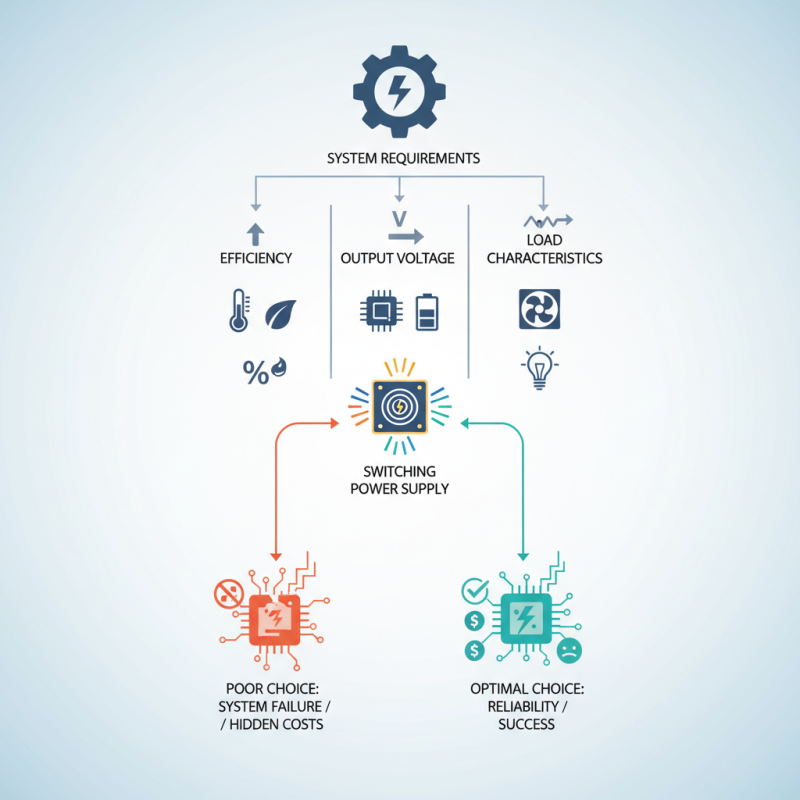
Choosing a Switching Power Supply isn’t just about specifications. It's about matching the power supply to your application’s unique needs. You must consider factors like efficiency, output voltage, and load characteristics. A mismatch can cause overheating or reduce performance, leading to frustrating downtime.
Many overlook the long-term implications of their choices. Sometimes, the lowest price attracts attention, but hidden costs can arise later. Ensuring reliability requires thoughtful decision-making. Think about how your choice affects the entire system. Don't rush; take the time to research and analyze your options. The right Switching Power Supply might be the key to your project's success or failure.
Understanding Switching Power Supply Basics
When selecting a switching power supply, understanding its basics is crucial. A switching power supply converts standard voltage into the voltage required by your devices efficiently. According to industry reports, the market for these power supplies is projected to grow significantly, reaching over $40 billion by 2025. This growth underscores the importance of making informed choices.
Every switching power supply has specific specifications. Voltage, current, and efficiency are key factors that vary between models. A typical efficiency rating for high-quality units can exceed 90%. However, not all supplies achieve this, and poor choices can lead to increased heat and reduced lifespan.
Pay attention to not just power ratings, but also load regulation and noise. Reports suggest that some supplies produce noise levels that can interfere with sensitive electronics. This interference could affect performance and reliability, showcasing that not all units are equal. Ultimately, ensuring compatibility and reliability is foundational. Ignoring the basics can lead to inefficiencies, wastage, and even device damage in the long run.
Key Specifications to Consider in Power Supply Selection
When selecting a switching power supply, key specifications play a critical role. One important aspect is the output voltage and current ratings. For instance, reports indicate that 70% of systems fail due to inadequate power supply specifications. It’s crucial to match the output characteristics to your application. Ensure the voltage tolerances are tight. A tolerance within ±5% can prevent equipment damage and malfunctions.
Another specification to consider is efficiency. Power supplies with an efficiency rating above 90% significantly reduce energy waste. Unfortunately, many products on the market fail to meet these standards. In fact, research shows that subpar efficiency can lead to heat generation, which impacts system reliability. Aim for supplies that comply with Energy Star or similar certifications. They’re more likely to save costs in the long run.
Additionally, consider the form factor and thermal management features. An ideal power supply should fit seamlessly in your system’s layout. Small sizes can lead to restrictive airflow. This can cause overheating, potentially damaging the supply and the connected devices. It's vital to evaluate these aspects carefully. Balancing compactness with effective heat dissipation often requires compromise.
Essential Tips for Choosing the Right Switching Power Supply - Key Specifications to Consider in Power Supply Selection
| Specification | Description | Importance |
| Voltage Output | The specific voltage levels the power supply can deliver. | Critical for device compatibility. |
| Current Rating | The maximum current the power supply can provide. | Ensures sufficient power for operation. |
| Efficiency | A measure of how much input power is converted to output power. | Higher efficiency reduces energy costs. |
| Ripple Voltage | The AC component superimposed on the DC output voltage. | Low ripple is needed for sensitive electronics. |
| Overload Protection | Feature that prevents damage during power surges. | Essential for safety and longevity. |
| Operating Temperature | The range of temperatures in which the power supply can function. | Affects durability and reliability in different environments. |
| Size and Form Factor | Physical dimensions and shape of the power supply. | Critical for integration into existing systems. |
Evaluating Efficiency Ratings and Their Importance
When selecting a switching power supply, efficiency ratings play a vital role. The efficiency of a power supply indicates how much power is converted into usable output versus how much is lost as heat. A report from the Department of Energy found that improvements in efficiency could reduce energy consumption in computing and electronic devices by 10 to 30%. This highlights the need to prioritize efficiency when making a selection.
However, not all ratings are equal. A unit rated at 90% efficiency may still waste considerable energy under certain loads. Underperformance in real-world conditions can result from factors such as poor design or inadequate thermal management. A recent study indicated that even high-rated supplies can drop below 80% efficiency at partial loads. This reflects the importance of evaluating performance data across various operating conditions.
It's also crucial to consider energy efficiency standards. The voluntary Energy Star program has set benchmarks for power supplies. Meeting or exceeding these standards can signify a reliable product. Yet, many consumers overlook these ratings. Instead, they might focus solely on power output or physical size. Ignoring efficiency can lead to higher electricity bills and increased carbon footprint over time. Reflecting on these aspects can lead to more informed choices.
Efficiency Ratings of Switching Power Supplies
This chart illustrates the efficiency ratings of various switching power supplies based on industry standards. A higher efficiency rating indicates better energy utilization, which is crucial for reducing operational costs and minimizing heat generation.
Assessing Size and Form Factor for Your Application
When selecting a switching power supply, size and form factor are crucial. The physical dimensions of the power supply will determine how it fits into your system. For tight spaces, compact designs may be necessary. However, smaller units can lead to overheating issues if not adequately ventilated. Consider the trade-off between size and cooling when making your decision.
Evaluate the installation environment as well. If your power supply will be used in a harsh setting, durability is essential. You may need rugged designs that can withstand shocks and vibrations. Remember that a mismatched size can create headaches during integration. Often, planners overlook these factors, leading to unnecessary complications.
Take time to visualize the layout. Sketching your system can help identify the best fit for the power supply. Don't rush into a decision based solely on specifications. Sometimes, it’s worth reviewing your choices to ensure they meet all your application's needs. A detailed approach avoids potential pitfalls in the future.
Budgeting: Finding a Balance Between Cost and Quality
When selecting a switching power supply, budgeting is crucial. Finding the right balance between cost and quality can be challenging. Many people dive into options based on price alone. However, this approach can lead to performance issues down the line. Sometimes, a cheaper unit will fail to provide stable power, costing more in repairs or replacements.
It's important to consider specific needs first. Assess power requirements, efficiency ratings, and durability. While a low-priced option might seem attractive, it may not last long or handle high loads. Investing a bit more upfront can result in lower overall costs over time. Many users overlook this and often regret their decision later.
An effective strategy is to prioritize essential features. Read reviews and gather insights from trusted sources. Don't just focus on the price tag; focus on reliability and support as well. A power supply that meets specific requirements can save headaches later. Quality components can mean smoother operation and longer life. Balancing cost with these qualities is the key to making a smart investment.