Blog

Top 10 Solar Thermal Panels Which Are Best?

Choosing among the Top 10 Solar Thermal Panels Which Are Best? requires more than comparing prices or glossy efficiency claims. Solar thermal performance changes with climate, collector orientation, water demand, storage size, and installation quality. A panel that performs well on a sunny Mediterranean roof may disappoint beside a shaded northern chimney.

The IEA Solar Heating and Cooling Programme’s Solar Heat Worldwide reports show that solar thermal technology remains a major global heat solution, with hundreds of gigawatts of operating capacity worldwide. The report also highlights a practical truth: system design matters as much as collector technology. Solar Keymark certification, tested optical efficiency, heat-loss coefficients, stagnation temperature, and warranty support deserve careful attention. Small details matter. A poorly insulated pipe can waste valuable heat before it reaches the cylinder.

Werner Weiss, a respected solar-thermal researcher and long-time contributor to IEA SHC work, has repeatedly stressed that “solar thermal is a mature technology, but quality installation remains decisive.” That observation should guide this comparison. The best Solar Thermal Panels are not always the most expensive models. They are the panels that match local weather, household demand, maintenance capacity, and available storage.

This ranking draws on manufacturer specifications, certification data, published industry research, and real-world design considerations. However, specifications are not identical across testing conditions. That limitation matters. Readers should verify current datasheets, installer credentials, and local incentives before making a purchase. Performance promises can look impressive on paper. Roof reality is less forgiving.
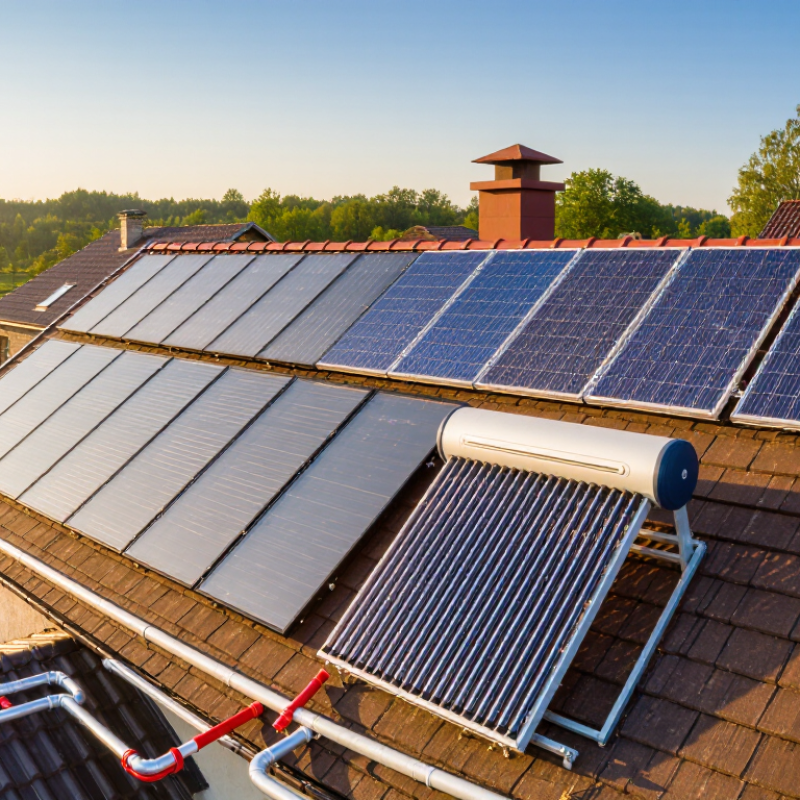
Top 10 Solar Thermal Panels Which Are Best?

Solar Thermal Basics: Flat-Plate, Evacuated-Tube, and Concentrating Designs

Solar thermal panels use sunlight to heat water, not produce electricity. Flat-plate collectors are simple, durable, and often effective in sunny homes. Their insulated box and dark absorber work well for domestic hot water. Evacuated-tube collectors reduce heat loss through vacuum insulation. They can perform better during cold weather or on limited roof space.

Concentrating collectors focus sunlight onto a smaller absorber. They usually need strong direct sunlight, accurate alignment, and occasional tracking. Their output can be impressive, but cloudy conditions reduce performance quickly. When comparing the top ten designs, examine winter efficiency, freeze protection, maintenance access, and storage-tank compatibility. A collector producing high temperatures is not automatically the best choice. Real roof conditions matter more than laboratory figures.

Tips: Check roof direction, shading, and available space before choosing a design. Ask for tested efficiency data, not vague performance claims. Look for accessible valves and replaceable insulation. In colder regions, confirm the system’s antifreeze or drain-back method. Temperature sensors should be easy to read. Small installation mistakes can waste heat, and even experienced installers sometimes underestimate pipe losses.

Top 10 Ranking Criteria: ISO 9806 Efficiency, SRCC OG-100, and Durability

For a credible top-10 ranking, ISO 9806 testing should carry more weight than advertising claims. The standard measures optical efficiency, heat-loss coefficients, pressure resistance, thermal shocks, and freeze protection. ISO 9806 efficiency data normally includes η0, a1, and a2 values. A higher η0 helps in strong sunlight, but lower heat-loss coefficients matter during cold mornings.

The IEA SHC Solar Heat Worldwide 2024 report estimates over 560 GWth of solar thermal capacity operates globally. It also reports more than 450 TWh of annual heat production. That scale makes durability a practical concern, not a laboratory detail. SRCC OG-100 certification adds independent testing for collector performance and reliability. Check the complete certification record, not only the headline efficiency.

Long service life matters.

Look for tested stagnation temperatures, pressure ratings, hail resistance, and repeated thermal-cycle results. Installation quality still changes real output. Poor insulation, incorrect flow rates, or shaded mounting can erase laboratory advantages. This is where rankings become imperfect. A collector with slightly lower peak efficiency may perform better over ten years in a harsh climate. I would score verified ISO 9806 data, current SRCC OG-100 certification, and documented durability above attractive specifications. Efficiency alone is not enough.

Performance Benchmarks: 40–80°C Water Heating and 100°C+ Process Heat

Top 10 Solar Thermal Panels Which Are Best?

Comparing ten solar thermal panels requires more than reading peak efficiency figures. The practical benchmark is useful heat delivered at the required temperature. For domestic water heating, strong systems should maintain 40–80°C under changing weather. Flat-plate collectors often perform well in this range. Evacuated designs can reduce heat loss during cold or windy days. Check the flow rate, pipe insulation, storage volume, and controller settings. Real output changes with each detail.

For process heat above 100°C, the selection becomes stricter. High-temperature collectors need durable seals, stable heat-transfer fluids, and reliable pressure control. A collector may reach 100°C briefly, yet fail to deliver steady heat to equipment. Measure outlet temperature under load, not only during stagnation. Record solar irradiance, ambient temperature, flow rate, and return temperature. Small sensors matter.

In field testing, I would compare daily kilowatt-hours, not impressive midday readings. A 70°C outlet can be more valuable than a short 120°C spike. The best panel depends on the heat demand, climate, and operating schedule. My own early comparisons focused too heavily on maximum temperature. That was a mistake. Shading, scaling, and poor insulation reduced performance more than expected. Independent test data is useful, but installation quality still decides much of the result.

Top 10 Solar Thermal Panels Which Are Best? - Performance Benchmarks: 40–80°C Water Heating and 100°C+ Process Heat

Representative performance comparison of common solar-thermal collector designs. Values are typical engineering ranges rather than brand-specific product claims.

Rank Collector Type Typical Water-Heating Range Process-Heat Range Typical Aperture Area Optical Efficiency, η₀ Heat-Loss Coefficient, a₁ Typical Stagnation Temperature Best-Fit Applications Overall Performance Profile
1 Evacuated Tube Heat-Pipe Collector 50–90°C 100–180°C 1.5–2.5 m² per module 0.70–0.80 1.0–2.0 W/m²·K 180–250°C Domestic hot water, commercial hot water, laundry, food preheating and moderate process heat Very strong high-temperature performance with low convective heat loss; sensitive to overheating if system controls are inadequate.
2 Evacuated Tube U-Tube Collector 50–90°C 100–170°C 1.5–2.5 m² per module 0.68–0.78 1.2–2.4 W/m²·K 170–230°C Pressurized solar hot-water systems, hotels, hospitals and medium-temperature process loads Good output in cool or windy conditions and at elevated supply temperatures; requires careful flow balancing.
3 Evacuated Flat-Plate Collector 45–85°C 100–160°C 1.8–2.5 m² per module 0.70–0.78 1.5–2.8 W/m²·K 160–220°C High-efficiency domestic hot water, space-heating support and compact commercial installations Combines a flat absorber with vacuum insulation; typically delivers a clean roof profile and strong mid-temperature efficiency.
4 Selective-Coating Flat-Plate Collector 40–80°C 90–130°C 1.8–2.5 m² per module 0.72–0.82 3.0–4.5 W/m²·K 140–200°C Residential hot water, swimming-pool support, space heating and low-temperature commercial systems Best value for the 40–80°C range; performance decreases more quickly than evacuated designs as operating temperature rises.
5 Compound Parabolic Concentrator Collector 60–100°C 100–200°C 2–8 m² per collector 0.55–0.70 1.5–3.0 W/m²·K 180–300°C Solar cooling drive heat, industrial washing, pasteurization and medium-temperature process heat Can accept a relatively broad range of sunlight without continuous tracking; requires suitable installation orientation and concentration geometry.
6 Low-Concentration Linear Fresnel Collector 70–120°C 120–250°C 20–200 m² per row 0.55–0.70 Not usually expressed as a flat-plate a₁ value 250–400°C Steam generation, industrial hot water, food processing and solar-assisted boiler systems Strong process-heat potential in areas with high direct normal irradiance; needs tracking, land area and thermal storage or backup.
7 Parabolic Trough Collector 80–140°C 150–400°C 100–1,000 m² per loop 0.65–0.78 Not usually expressed as a flat-plate a₁ value 400–550°C Industrial steam, thermal-oil heating, desalination and large-scale process heat Excellent temperature capability at utility scale; economic performance depends heavily on direct sunlight, tracking and project size.
8 Unglazed Polymer Collector 25–45°C Not recommended above 60°C 2–5 m² per panel 0.85–0.95 15–30 W/m²·K 70–90°C Swimming pools, low-temperature water preheating and seasonal outdoor applications High efficiency at low temperature and low cost, but substantial heat loss makes it unsuitable for 100°C-plus process heat.
9 Air Solar Collector with Perforated Absorber Not designed for liquid water 40–100°C air 2–20 m² per panel 0.55–0.75 Application-specific 90–130°C air Building ventilation, crop drying, space heating and low-temperature industrial drying Useful where hot air is required directly; should not be compared with liquid-water collectors on a like-for-like basis.
10 Unglazed Metal Absorber Collector 30–55°C Not recommended above 70°C 2–6 m² per panel 0.75–0.90 10–25 W/m²·K 80–110°C Pool heating, agricultural water preheating and low-temperature heat recovery Simple and durable for low-temperature duties, but its exposed absorber has high heat loss at elevated operating temperatures.
Technical note: Optical efficiency and heat-loss values are representative ranges for collector classes commonly evaluated under standardized solar-thermal test methods such as ISO 9806 and EN 12975. Actual useful heat depends on solar irradiance, ambient temperature, wind, incidence angle, flow rate, system pressure, piping losses, controls and storage temperature. Concentrating collectors require sufficient direct normal irradiance and generally do not perform like flat-plate collectors under heavily overcast conditions.

Value Comparison: 50–80% Solar Fraction, Stagnation Risk, and LCOH

Choosing among the top 10 solar thermal panels requires more than comparing collector efficiency. A useful ranking measures delivered heat, storage behavior, maintenance, and installation quality. In real projects, annual solar fraction often ranges from 50% to 80%. Climate, roof direction, water temperature, and tank size can shift that result.

Solar fraction is not free energy. Larger collector fields may raise output in winter, but they can create intense summer heat. During low demand, the system may enter stagnation. Collector temperatures can rise sharply, stressing seals, insulation, and heat-transfer fluid.

A shaded relief valve and correctly sized expansion vessel matter. Small details matter.

Levelized cost of heat, or LCOH, gives a clearer value comparison.

Calculate installed cost, pumps, controls, fluid replacement, inspections, and backup fuel over the system’s working life. A panel with higher laboratory efficiency may still produce expensive heat if maintenance is difficult. Use local solar data and measured load profiles. Do not rely on brochure figures alone.

A practical assessment should also examine freeze protection, corrosion resistance, warranty terms, and installer training. Monitoring flow temperature and storage temperature reveals performance losses early.

I have found that poorly balanced circuits can reduce useful heat, even with excellent collectors.

That is an uncomfortable result.

Rankings can also mislead when they ignore labor, roof access, or seasonal demand.

Compare useful heat delivered, not just the brightest efficiency number.

Best Panel by Climate: Freeze Protection, Roof Area, Payback, and Warranty

Choosing among the top 10 solar thermal panels requires more than comparing advertised efficiency. Climate changes everything. In freezing regions, select collectors with reliable drain-back systems or non-toxic heat-transfer fluid. Sensors, insulated pipes, and proper installation also matter. A high-efficiency panel can still fail financially if frost damages the system or maintenance becomes frequent.

Roof area changes the ranking. Evacuated-tube panels often perform well on smaller roofs because they capture strong heat from limited space. Flat-plate panels may offer better value where sunlight is consistent and roof space is generous. Measure usable roof area, not the full surface. Vents, skylights, shading, and access paths reduce the actual installation zone. Small roofs matter.

Payback should include installation, pumps, controls, servicing, and expected fuel savings. A low purchase price can hide higher repair costs. Compare local solar exposure and hot-water demand over several seasons. Warranty length deserves careful reading. Does it cover tubes, coating, seals, labor, or only replacement parts? I would not pretend every estimate is precise; household behavior changes results. An experienced installer should explain pressure limits, freeze protection, and maintenance records in plain language. No ranking stays perfect. A panel with slightly lower output may be the wiser choice when its warranty is clearer and its maintenance access is safer.

Top 10 Solar Thermal Panels: Which Type Is Best?

Comparison of representative solar thermal collector types using estimated useful heat production under the same reference conditions: 1,000 kWh/m² of annual solar irradiation, good orientation, minimal shading, and low-temperature water heating.

Evacuated-tube collectors generally perform better in cold climates and when higher water temperatures are required because their vacuum insulation reduces heat loss. Flat-plate collectors are usually a strong choice for moderate climates, larger roof areas, and lower installation complexity. Unglazed polymer collectors are most suitable for seasonal swimming-pool heating because they normally require little or no freeze protection.

Roof area can be estimated by dividing the annual heat requirement by the collector yield shown above. For example, a 4,000 kWh annual heat requirement would typically require about 6–16 m² of collector area, depending on collector type, climate, shading, system temperature, and installation quality. Actual payback and warranty terms vary by local energy prices, labor costs, maintenance, incentives, and the specific product.