Blog

Why Do You Need a Spa Chiller?

Why Do You Need a Spa Chiller?

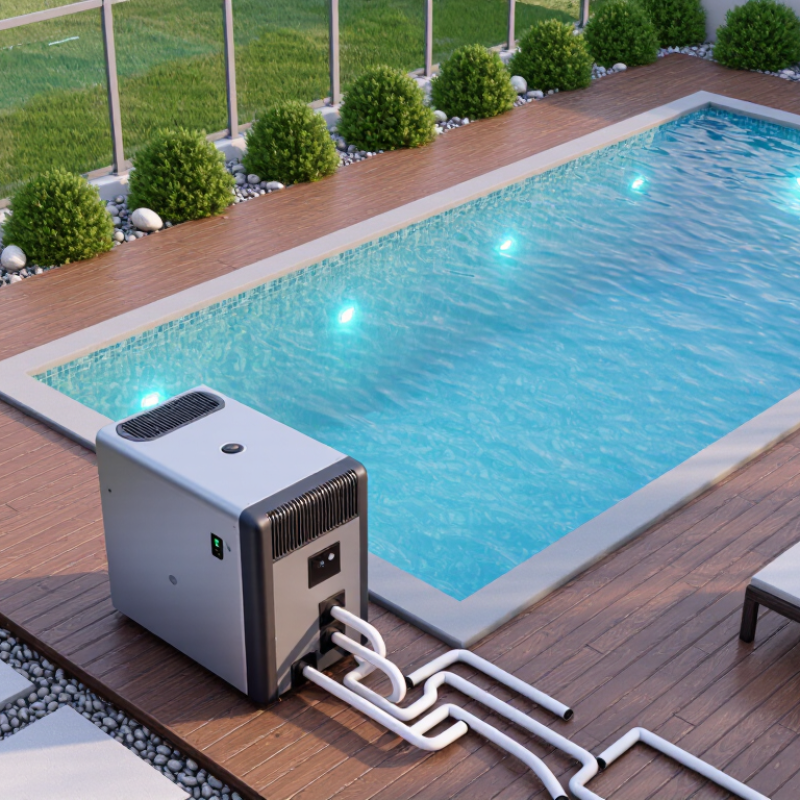
A Spa Chiller helps control water temperature when natural cooling is not enough. Hot weather, frequent use, and powerful pumps can raise spa water quickly. Even a few degrees can affect comfort, equipment performance, and water treatment. A reliable chiller removes excess heat and maintains a steadier bathing environment.

This matters in homes, hotels, wellness centers, and rehabilitation facilities. For example, a spa exposed to afternoon sunlight may feel comfortable at breakfast but become uncomfortably warm by noon. A properly selected Spa Chiller can reduce these temperature swings. It also supports more predictable operation for filtration, sanitation, and circulation systems. However, cooling capacity must match the spa’s volume, insulation, location, and usage pattern. Bigger is not always better.

There is no magic fix.

Poor insulation, blocked airflow, or an undersized pump can limit results. Regular maintenance remains essential. Filters need cleaning, connections require inspection, and airflow around the chiller should remain unobstructed. In practice, many installation problems come from ignoring these simple details. That is worth reconsidering.

A professional assessment can identify the correct cooling range and equipment size. Manufacturers’ specifications should guide the final decision. When comfort, energy use, and long-term reliability matter, a Spa Chiller becomes more than an optional accessory. It becomes a practical part of responsible spa management.
Why Do You Need a Spa Chiller?

What Is a Spa Chiller and How Does It Work?

A spa chiller is a cooling system that removes excess heat from spa water. It works through a refrigeration cycle. A compressor raises the refrigerant’s pressure. The condenser releases heat. An expansion valve lowers pressure, and the evaporator absorbs heat from circulating water. The cooled water then returns through the jets.

This matters when sunlight, warm weather, pumps, or frequent use push water temperature upward. The CDC’s Model Aquatic Health Code limits hot tub water to 104°F (40°C), because higher temperatures increase heat-related health risks. A chiller helps maintain a stable setting instead of relying on ice or constant draining. ASHRAE Handbook—HVAC Applications, 2023, explains that refrigeration performance depends on heat transfer, airflow, and operating conditions. In practice, poor ventilation can reduce cooling efficiency. No system performs perfectly.

Tips: Check water temperature with a calibrated thermometer, not only the control panel. Keep filters clean, because restricted flow makes the chiller work harder. Leave clearance around the condenser. Record temperature changes during the hottest afternoon. That small log can reveal problems early.

A properly sized chiller should match spa volume, pump flow, indoor heat load, and local climate. Oversizing may increase purchase and operating costs. Undersizing may run continuously without reaching the target temperature. The PHTA ANSI/APSP/ICC-2 standard emphasizes safe spa operation, water circulation, and temperature control. Real conditions still vary. That is why installation data deserves careful review.

Why Spa Water Temperature Requires Precise Control

Why Do You Need a Spa Chiller?

Why Spa Water Temperature Requires Precise Control

Spa water temperature is not merely a comfort setting. It directly affects user safety, sanitation, equipment performance, and operating consistency. The CDC’s Healthy Swimming guidance states that hot tub water should never exceed 104°F (40°C). Even small temperature changes can feel uncomfortable when guests remain immersed for several minutes. A reliable spa chiller helps remove excess heat from pumps, sunlight, warm rooms, and repeated use.

Temperature control also supports better water management. Warmer water accelerates chlorine loss and can increase bather-related contamination. The CDC Model Aquatic Health Code links proper disinfection with controlled operating conditions. Meanwhile, the ASHRAE Handbook—HVAC Applications recommends maintaining indoor aquatic areas around 50–60% relative humidity. Poorly balanced air and water conditions may encourage condensation, corrosion, and unpleasant odors. The water may look clear, yet the environment can still be unstable.

In practice, a chiller should react steadily, not aggressively. Sudden cooling wastes energy and may create uncomfortable temperature swings. Oversizing the system is another common mistake; bigger is not always better. Actual heat load, water volume, cover usage, sunlight, and peak occupancy must be measured. I would also question fixed settings. A quiet morning and a crowded afternoon rarely require identical cooling capacity. Precision matters most when conditions change.

Why Do You Need a Spa Chiller?

Spa water requires precise temperature control because heat loss increases as the difference between water temperature and surrounding air becomes larger. The chart uses a 20°C ambient temperature and a calculated heat-loss index proportional to that temperature difference. For safety, spa water should not exceed 40°C.

Keeping the water near the selected setpoint improves comfort, reduces unnecessary cooling or heating demand, and helps prevent unsafe overheating.

Key Benefits of Using a Spa Chiller

Hot water feels relaxing, but overheated water can quickly become uncomfortable and unsafe. That is where a spa chiller earns its place. The CDC’s 2023 Model Aquatic Health Code recommends a maximum spa temperature of 104°F (40°C). The 2023 PHTA public spa standard uses the same limit. An accurately sized chiller helps maintain this ceiling during warm weather, heavy use, or poor ventilation. The benefit is control, not simply colder water.

A chiller also improves comfort and operating consistency. After a sunny afternoon, it can remove accumulated heat before guests enter the spa. This reduces long waiting periods between sessions. Stable water temperature supports predictable bathing, therapy, and maintenance routines. It may also protect pumps, covers, and surrounding materials from repeated thermal stress. Small details matter. A display reading of 38°C feels very different from water drifting above 40°C.

However, a chiller is not a magic box. It consumes electricity and may increase operating costs when insulation is weak. The U.S. Department of Energy’s energy guidance emphasizes reducing heat transfer before adding mechanical cooling. A tight cover, insulated shell, shaded placement, and clean filters can lower the chiller’s workload. Water balance and sanitation still require separate attention. Temperature control alone cannot guarantee safe water. In practice, choosing capacity by volume, climate, cover quality, and expected usage is more reliable than selecting equipment by appearance or price.

Why Do You Need a Spa Chiller? - Key Benefits of Using a Spa Chiller
Benefit or Design Factor Relevant Data or Engineering Fact How a Spa Chiller Helps Practical Performance Indicator Important Consideration
Stable Water Temperature The temperature of water changes when it gains heat from sunlight, surrounding air, pumps, plumbing, and bathers. A dedicated chiller removes heat from the circulating water and helps maintain a selected cooling setpoint. Temperature variation around the selected setpoint, measured in °F or °C. Actual stability depends on insulation, ambient temperature, water volume, cover use, and heat gain.
Cooling Energy Requirement Water has a specific heat of approximately 1 BTU per pound per °F. One US gallon of water weighs approximately 8.34 lb. The chiller can be sized according to the water volume, required temperature reduction, and expected heat load. Cooling load in BTU/h or kW of cooling capacity. The calculation must include continuous heat gain, not only the initial temperature pull-down.
Example: 500-Gallon Spa Reducing 500 US gallons by 10°F requires approximately 41,700 BTU, equal to about 12.2 kWh of thermal energy. A properly sized chiller can remove this heat over the target pull-down period while also handling ongoing heat gain. Required pull-down time and maintained water temperature. This is a theoretical estimate and excludes heat entering the water during cooling and system losses.
Example: 1,000-Gallon Spa Reducing 1,000 US gallons by 10°F requires approximately 83,400 BTU, equal to about 24.4 kWh of thermal energy. The chiller provides predictable cooling for larger water volumes and frequent-use installations. Cooling capacity required versus actual water-volume reduction. Large spas generally require higher-capacity equipment or longer cooling cycles.
Cooling Capacity Selection One refrigeration ton equals 12,000 BTU/h, or approximately 3.517 kW of cooling capacity. This provides a common method for comparing chiller capacity with the calculated heat load. Rated capacity, expressed as BTU/h, refrigeration tons, or kW. Rated capacity can change with entering-water temperature, ambient temperature, and operating conditions.
User Comfort Cooler water can improve comfort during hot weather, exercise recovery, contrast therapy, and cold-water applications. The chiller enables repeatable water temperatures instead of relying on ice or uncontrolled ambient cooling. Water temperature before use and temperature recovery between sessions. Safe operating temperature depends on the application, exposure time, and user health conditions.
Reduced Dependence on Ice Ice provides temporary cooling but melts as it absorbs heat; its cooling effect is difficult to control precisely. A recirculating chiller provides continuous heat removal and can maintain a programmed setpoint. Ice consumption, water-temperature consistency, and preparation time. The chiller still requires electrical power, water circulation, ventilation, and routine maintenance.
Water Quality Support Lower water temperatures generally slow biological and chemical reaction rates, but cooling does not disinfect water. A chiller can support a more controlled water-treatment strategy by maintaining the intended operating temperature. Water temperature, pH, sanitizer residual, clarity, and test frequency. Filtration and an appropriate sanitizer program remain essential for water safety.
Equipment Protection High water temperatures and excessive heat gain can increase thermal stress on pumps, seals, hoses, and control components. Maintaining the design temperature can reduce operation outside the equipment’s intended conditions. Operating temperature, alarm frequency, pump runtime, and maintenance intervals. Equipment protection depends on correct installation, water chemistry, flow rate, and ventilation.
Operational Convenience Manual cooling methods require repeated monitoring and adjustment, especially when ambient conditions change. Digital controls, temperature sensors, and automatic cycling reduce the need for constant manual intervention. Setpoint accuracy, cycle frequency, and daily preparation time. Control accuracy depends on sensor placement, water circulation, and calibration.
Energy and Operating Cost Cooling energy is influenced by water volume, temperature difference, ambient heat gain, insulation, and operating hours. Using a cover, insulating exposed plumbing, and operating the chiller only when needed can reduce unnecessary heat gain. Electricity use in kWh, operating hours, and cost per cooling cycle. A chiller does not automatically reduce energy use; correct sizing and good insulation are critical.
Maintenance Requirements Heat exchangers, filters, pumps, and water circuits require periodic inspection and cleaning. A dedicated system makes the cooling components accessible for scheduled servicing and performance checks. Filter pressure, flow rate, temperature differential, and service frequency. Follow the equipment manufacturer’s maintenance schedule and maintain balanced water chemistry.

Note: Calculations are based on standard water properties and idealized conditions. Actual performance varies with spa size, insulation, ambient temperature, circulation rate, humidity, cover use, and chiller specifications.

When Does a Spa Need a Dedicated Chiller?

Why Do You Need a Spa Chiller?

When Does a Spa Need a Dedicated Chiller?

A spa needs a dedicated chiller when its water temperature must stay stable under continuous heat gain. This condition often appears in commercial spas, hydrotherapy centers, hotels, and busy fitness facilities. The CDC’s Model Aquatic Health Code identifies 40°C (104°F) as the maximum water temperature for public hot tubs. That limit leaves little room for uncontrolled heating.

Pool equipment, sunlight, pumps, air temperature, and frequent bathers all add heat. ASHRAE’s HVAC Applications Handbook identifies evaporation, convection, radiation, and equipment loads as key factors in aquatic climate control. In practice, a crowded spa can feel comfortable in the morning, then rise several degrees by afternoon. That is when passive cooling becomes unreliable. A dedicated chiller removes heat directly and maintains a narrower operating range.

Small residential spas may not need one. Occasional use and mild outdoor conditions can reduce the load. However, heavy use changes the calculation. A facility operating for ten hours daily should measure water temperature, flow rate, room temperature, and peak occupancy before choosing equipment. Oversizing wastes energy. Undersizing causes long recovery times. I have seen designs rely on average occupancy, which often misses the busiest hour. That assumption deserves review.

Sources: CDC Model Aquatic Health Code, 2023; ASHRAE Handbook—HVAC Applications, 2023.

How to Choose the Right Spa Chiller for Your Needs

A spa chiller controls rising water temperatures when sunlight, pumps, bathers, or warm equipment add unwanted heat. The correct unit is not chosen by spa volume alone. You need to measure water volume, target temperature, ambient temperature, circulation flow, and daily usage.

The CDC’s 2023 Model Aquatic Health Code limits hot tub water to 104°F (40°C). It also lists free chlorine levels of 3–10 ppm for hot tubs. These figures support hygiene, but they do not determine chiller capacity. ASHRAE Handbook—HVAC Applications, 2023, separates cooling loads into evaporation, convection, radiation, equipment heat, and occupancy. Ask a qualified technician to calculate these loads.

A small household spa may need modest capacity, while a busy therapy facility requires stronger continuous cooling. Oversizing can increase purchase costs and cause short cycling. Undersizing may leave water warm during afternoon use.

Tips: Check the chiller’s cooling capacity at your actual water temperature, not only its best laboratory rating. Confirm the required flow rate and pipe size. Leave ventilation space around the condenser. I would also record water temperature every hour for several busy days. A calculation can still miss shaded conditions, sudden guest arrivals, or a dirty filter. That evidence often produces a better choice than guessing from the tub’s litres alone.

Article Source: