Blog
How to Choose the Right Solar Panel for Your Needs?
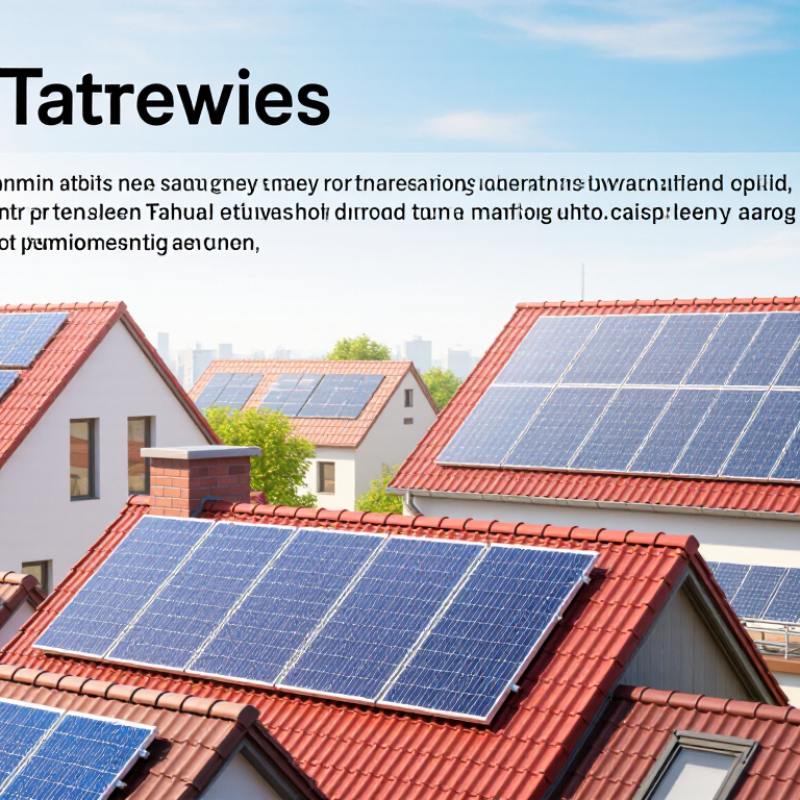
Choosing the right Solar Panel is not simply a matter of selecting the highest efficiency number. Your roof, electricity use, climate, budget, and future plans all influence the decision. A compact roof may need high-efficiency panels, while a spacious roof may benefit from a lower-cost option. Shade from a chimney can also reduce production more than many buyers expect.
Fatih Birol, Executive Director of the International Energy Agency, described solar power as “the new king of electricity.” His observation reflects solar energy’s growing importance, but it does not identify the best panel for every home. A suitable choice requires careful comparison. Check the panel’s power rating, temperature coefficient, degradation rate, product warranty, and performance warranty. These details matter when summer heat reaches the roof and output begins to fall.
Real-world experience also exposes uncomfortable gaps. A panel with impressive laboratory results may perform differently under dust, cloud, heat, or partial shade. Some warranties sound reassuring but depend heavily on the manufacturer’s long-term stability. Installation quality can matter as much as panel technology. It is worth asking who will inspect the roof, design the system, and handle future service. No panel is perfect. I have seen buyers focus on price first, then regret ignoring shading and maintenance access. This guide will help you weigh measurable performance against practical conditions, so your final Solar Panel choice fits your property rather than merely looking impressive on paper.
Understanding Solar Panel Types and Their Core Differences
How to Choose the Right Solar Panel for Your Needs?
Panel type shapes performance, cost, and installation choices. Monocrystalline panels usually provide higher efficiency in limited roof space. Commercial modules commonly reach about 20–23% efficiency, according to Fraunhofer ISE’s 2024 Photovoltaics Report. Polycrystalline panels often cost less, but they generally need more area for similar output. Thin-film panels are lighter and perform better in some heat and low-light conditions. They usually require more installation space. Space changes everything.
Bifacial panels can produce electricity from front and reflected rear-side light. Their advantage depends heavily on roof height, surface brightness, and mounting design. The IEA Photovoltaic Power Systems Programme reports that photovoltaic capacity exceeded 1.6 terawatts worldwide by the end of 2023. This growth does not make every panel suitable for every site. Temperature, shading, roof direction, snow, and local labor costs still matter. A simple efficiency ranking can mislead. I would also question laboratory ratings when a roof has morning shade.
Tips: Measure usable roof area, not total roof area. Request temperature-coefficient and degradation data. NREL research commonly uses about 0.5% annual degradation as a practical reference for crystalline-silicon systems, though actual results vary. Compare warranties carefully, and inspect the installer’s testing process. A cheaper panel may become expensive when extra mounting, wiring, or replacement work is needed.
How to Choose the Right Solar Panel for Your Needs? - Understanding Solar Panel Types and Their Core Differences
| Panel Type | Typical Module Efficiency | Typical Power Density | Performance in Limited Space | Temperature Coefficient | Expected Service Life | Main Advantages | Key Limitations | Best Suited For |
|---|---|---|---|---|---|---|---|---|
| Monocrystalline Silicon | Approximately 19%–23% | High; commonly about 180–230 W/m² under standard test conditions | Excellent; generally provides the highest output per unit of roof area among common crystalline-silicon options | Typically about −0.30% to −0.40% per °C | Usually 25–35 years of electricity production, with gradual output degradation | High efficiency, strong space utilization, mature manufacturing, and consistent long-term performance | Usually has a higher upfront cost than lower-efficiency alternatives; output still decreases as cell temperature rises | Small roofs, urban homes, premium residential systems, and projects where roof area is limited |
| Polycrystalline Silicon | Approximately 16%–19% | Moderate; commonly about 150–190 W/m² under standard test conditions | Good, but more roof area is normally required for the same system capacity | Typically about −0.35% to −0.45% per °C | Usually 25–30 years of electricity production | Proven technology, generally lower manufacturing complexity, and suitable for many standard installations | Lower efficiency and often a larger required installation area than monocrystalline panels | Large roofs, ground-mounted systems, and projects where available space is not a major constraint |
| Thin-Film | Approximately 10%–18%, depending on the semiconductor material | Low to moderate; more surface area is usually needed for the same rated capacity | Limited for small roofs, but useful where lightweight, flexible, or low-profile modules are important | Often about −0.20% to −0.30% per °C, although values vary by technology | Usually 20–30 years, depending on the material, encapsulation, and installation conditions | Lightweight designs, potentially better hot-weather behavior, and suitability for some low-load or curved surfaces | Lower efficiency, larger area requirements, and greater variation in durability and performance between technologies | Large commercial roofs, façades, lightweight structures, and applications with unusual mounting requirements |
| Bifacial Silicon | Front-side efficiency is commonly about 19%–23% | Potentially high, depending on rear-side light availability and mounting conditions | Good when installation space allows sufficient rear-side irradiance; benefits are reduced on opaque roofs installed close to the surface | Generally similar to the underlying crystalline-silicon cell technology | Usually 25–35 years of electricity production | Can generate additional energy from light reflected onto the rear side of the module | Energy gain depends strongly on ground reflectivity, row spacing, mounting height, shading, and system design | Bright rooftops, elevated systems, carports, and ground-mounted installations with reflective surfaces |
| High-Temperature-Optimized Silicon | Approximately 18%–22%, depending on the cell architecture | Moderate to high | Good, particularly where high ambient temperatures would otherwise reduce energy production | Often about −0.25% to −0.35% per °C, depending on the specific design | Usually 25–35 years of electricity production | Reduced relative power loss during hot operating conditions and strong performance in warm climates | Higher rated efficiency or lower temperature loss does not eliminate the need for proper ventilation and system design | Hot climates, rooftops with limited airflow, and installations exposed to high operating temperatures |
Note: Efficiency, power density, temperature coefficient, degradation rate, and service life vary by cell design, module construction, climate, installation quality, and operating conditions. Rated power is measured under standard test conditions and may differ from real-world output.
Related Posts
-
Transform Your Home with Clean Energy: The Ultimate Guide to Solar Panel Benefits and Installation
-
What Are Power Solar Panels and How Do They Work?
-

Exploring Diverse Alternatives to Power Solar Panels for Sustainable Energy Solutions
-
How to Choose the Best Residential Solar Panels for Your Home?
-
China Best Power Solar Energy Solutions for Global Buyers?
-
Best Small Solar Panels for Global Buyers in 2026?