Blog
- Home
- Blog
What Are the Top Solar Thermal Panel Types in 2026?
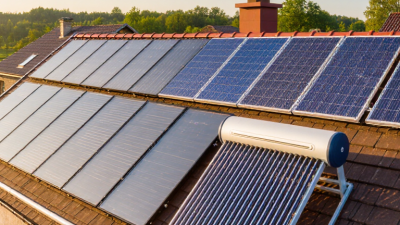
Solar Thermal Panels turn sunlight into useful heat, but “top” depends on the job. A family choosing domestic hot water may favor a different collector from a hotel heating a large storage tank. In 2026, flat-plate and evacuated-tube collectors remain familiar options. Unglazed panels can suit pool heating, while concentrating systems target higher temperatures and stronger direct sunlight. Each design has trade-offs.
Solar-thermal researcher Werner Weiss has contributed extensively to assessments of collector performance and solar heating. A fair paraphrase of a principle reflected in his work is: “Match the collector to the required temperature and local conditions.” That is not a universal ranking. A shaded roof, winter frost, limited space, or a long pipe run can change the result. Small details matter. Ask for tested performance data, operating-temperature ranges, freeze protection, and maintenance requirements—not just a peak-efficiency figure. A collector that looks impressive on a brochure may perform less well on a difficult roof.
This outline compares the main panel types by design, best-fit uses, strengths, and limitations. It also considers installation conditions and practical questions buyers should ask. Some comparisons will remain imperfect: weather, system design, and usage patterns vary too much for one “best” panel to suit everyone. That uncertainty deserves attention, not a sales slogan.
How Solar Thermal Panels Capture and Transfer Heat
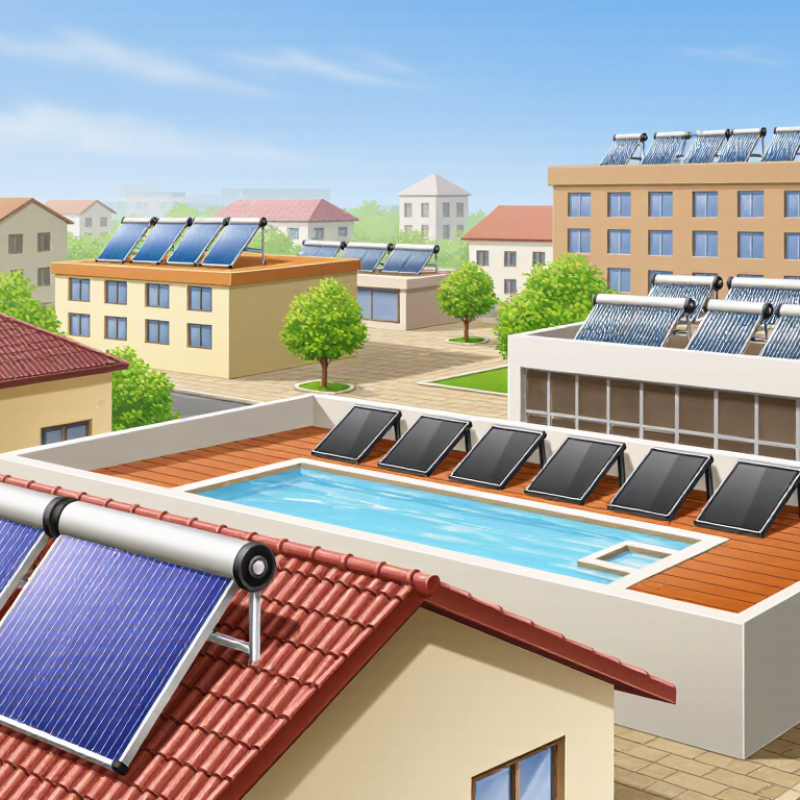
Solar thermal panels do not generate electricity; they collect sunlight and move its heat into water or another working fluid. Sunlight passes through glazing and warms a dark absorber. Channels carry the heat onward, while insulation helps reduce losses. Flat-plate collectors use an insulated, enclosed absorber and are common in domestic hot-water systems. Evacuated-tube collectors place absorbers inside glass tubes; the vacuum helps limit heat loss in cold or windy conditions. Unglazed polymer collectors are simpler and often heat swimming pools. They work best in warm weather. It is not magic.
Solar Heat Worldwide 2024, from the IEA Solar Heating and Cooling Programme, reports about 560 GWth of operating solar-thermal capacity globally by the end of 2023. The report estimates that these systems supplied around 456 TWh of heat in 2023. These figures cover different collector designs, not one panel type. A system’s useful output also depends on local sunlight, temperature, installation, and hot-water demand.
In a typical liquid-based system, a pump circulates heated fluid to a heat exchanger. The exchanger transfers energy to water in an insulated storage tank, ready for a shower or sink. A controller can start circulation when the collector is warmer than the tank. But heat still escapes through pipes and fittings; small losses add up. I would not judge performance from the collector alone. A well-sized tank and carefully insulated pipework matter, too.
What Are the Main Solar Thermal Panel Types in 2026?
Solar thermal panels collect sunlight as heat, but their designs suit different jobs. Flat-plate collectors use dark absorber plates beneath glazing. They are common for household hot water and work well in mild to warm conditions. Evacuated-tube collectors place absorbers inside glass tubes. The insulating vacuum helps limit heat loss, which can be useful in colder weather. These systems may cost more and need careful installation.
Unglazed collectors are usually simple polymer mats or tubes. They often heat swimming pools when outdoor temperatures are warm. Concentrating collectors use mirrors to focus sunlight onto a receiver. They can produce higher temperatures, but typically need strong direct sun and precise alignment. Not every roof or climate suits them. The real-world choice can be less tidy than a product chart suggests; shading, roof direction, water use, and maintenance all matter.
Tips: Match the collector to the heat needed. Ask an installer to check roof shade at different times of day and estimate seasonal output. Compare the full system, including storage tanks, pumps, and controls. A smaller, well-matched setup may serve better than a larger system. Check access for cleaning and repairs, too. A little overlooked detail can matter.
Indicative useful-heat temperature ranges vary with weather, system design, and application. Unglazed collectors are commonly used for pool heating; flat-plate and evacuated-tube collectors serve water and space-heating needs; concentrating collectors can provide higher-temperature heat in suitable conditions.
How Flat-Plate and Evacuated-Tube Collectors Differ
Flat-plate and evacuated-tube collectors both turn sunlight into useful heat, but they handle heat loss differently. A flat-plate unit places dark absorber channels beneath glazing and insulation. On a sunny roof, its broad surface can heat water efficiently for domestic use. Its simple construction can also make inspection straightforward. On cold, windy days, however, more heat can escape from the absorber.
Evacuated-tube collectors surround each absorber with a vacuum-insulated glass tube. The vacuum limits heat loss, helping the system maintain output when outdoor air is cold or sunlight is weaker. That advantage can matter for high-temperature processes or winter heating. Tubes are more fragile, though, and their appearance may not suit every roof. No collector wins everywhere.
The IEA Solar Heating and Cooling Programme’s Solar Heat Worldwide 2024 report puts global solar-thermal capacity at about 542 GWth by the end of 2022. That figure covers many system types; it does not prove one collector is superior. For a practical choice, compare certified performance under local temperatures, roof angle, shading, and required water temperature. A collector that looks impressive on paper may disappoint behind a chimney. I would treat broad rules as a starting point, not a verdict.
Where Unglazed and Concentrating Collectors Are Used
Unglazed solar thermal collectors are commonly used to heat swimming pools, where water needs only a modest temperature lift. Their dark polymer tubes or mats absorb sunlight directly, and pool water circulates through them without a glass cover. On a sunny roof near the pool, they can provide useful warmth during the swimming season. They are less suitable for cold, windy sites or year-round hot-water needs because heat escapes quickly. That trade-off matters.
Concentrating collectors use mirrors or lenses to focus sunlight onto a smaller receiver. Many designs track the sun, so they work best in open, dry locations with strong direct sunlight and little cloud cover. Applications include industrial heat, steam production, and some solar power systems, where higher temperatures can be useful. They are usually a poor match for shaded roofs or places with frequent haze, since diffuse light cannot be concentrated as effectively. Site conditions decide. A design that looks efficient on paper may underperform when dust, tracking maintenance, or seasonal clouds are overlooked. That part is easy to miss. Before choosing either type in 2026, compare the required water temperature, local sunlight, available space, and maintenance capacity. A small pool and a factory process are very different jobs.
What Are the Top Solar Thermal Panel Types in 2026? – Where Unglazed and Concentrating Collectors Are Used
| Collector type | Typical operating temperature | How it works | Common applications | Best-suited conditions | Key limitation |
|---|---|---|---|---|---|
| Unglazed collectors | Usually about 20–40°C water, depending on weather and flow rate | Water circulates through a dark, uninsulated polymer absorber that collects sunlight directly. | Seasonal swimming-pool heating and other low-temperature water heating | Warm, sunny periods when the required water temperature is relatively close to outdoor temperature | Loses heat quickly in cold or windy weather; generally unsuitable for high-temperature uses |
| Glazed flat-plate collectors | Commonly about 30–80°C; some systems operate outside this range | A glazed, insulated enclosure reduces heat loss from a dark absorber and fluid channels. | Domestic hot water, space heating, and low-temperature commercial hot water | Homes and buildings needing reliable low- to medium-temperature heat in varied climates | Efficiency falls as collector temperature rises well above ambient temperature |
| Evacuated-tube collectors | Often about 50–120°C, depending on design and system conditions | Absorbers sit inside sealed glass tubes; the vacuum around them reduces conductive and convective heat loss. | Domestic hot water, solar-assisted space heating, and some commercial processes | Cooler climates or applications requiring hotter water than many flat-plate systems provide efficiently | Can have higher upfront and maintenance costs; tubes require careful handling |
| Compound parabolic collectors (CPC) | Typically about 60–200°C, varying considerably by design | Reflective surfaces concentrate sunlight onto an absorber over a wider acceptance angle than many tracking concentrators. | Hot water, solar-assisted heating, and selected medium-temperature process-heat systems | Sites with strong sunshine where modest concentration is useful; some designs can operate without continuous tracking | Performance and tracking requirements depend on the collector geometry; output is reduced by shading and diffuse conditions |
| Parabolic-trough collectors | Commonly about 150–400°C in commercial systems | Curved mirrors focus direct sunlight onto a receiver tube, typically using single-axis tracking. | Industrial process heat and large solar-thermal power plants | Large, open sites with high direct normal irradiance and limited cloud cover | Needs direct sunlight and tracking; diffuse light contributes much less than it does for non-concentrating collectors |
| Linear Fresnel collectors | Often about 150–400°C, depending on the system | Rows of near-ground mirrors track the sun and focus direct sunlight onto an elevated fixed receiver. | Industrial steam, process heat, and some utility-scale solar-thermal projects | Sites with strong direct sunlight, available land, and a steady demand for heat or steam | Requires tracking and performs best with direct sunlight; optical efficiency can be lower than some other concentrating designs |
Temperature ranges are indicative, not guaranteed ratings. Actual output depends on collector design, sunlight, ambient temperature, wind, flow rate, and system configuration.
How to Compare Solar Thermal Panel Types for Different Needs
For a pool, an unglazed polymer collector is often the practical choice: it is simple and works at low temperatures. It may disappoint when nights are cold or the season is short. For showers and household hot water, compare glazed flat-plate and evacuated-tube collectors. Flat plates are typically sturdy and straightforward to service; evacuated tubes can limit heat loss in cold or windy conditions, but their added complexity may not suit every roof.
Match the collector to the required water temperature, local winter sunlight, roof space, and maintenance access. A south-facing roof with clear exposure helps, but shading from a chimney can reduce output. Check freeze protection and water quality with an installer, especially in colder regions. That shortcut is imperfect: a collector’s type alone cannot predict a system’s performance.
IEA SHC’s Solar Heat Worldwide 2023 and 2024 reports estimate global operating solar-thermal capacity at 522 GWth in 2022 and 542 GWth in 2023. These figures show the technology’s scale, not which panel fits a home. Ask for a site-specific yield estimate, including seasonal output and backup-heater use. I would also compare service access and replacement costs; brochures rarely make those details vivid.
Related Posts
-
Top 10 Solar Thermal Panels Which Are Best?
-
Top Benefits of Solar Panel Installation for Homes and Businesses?
-
Selecting the Right Manufacturer for High-Performance Power Solar Panels
-
How to Choose the Best Residential Solar Panels?
-
How to Navigate Export Certifications for the Best Residential Solar Systems: A Comprehensive Guide
-

7 Ultimate Benefits of Choosing Power Solar Energy for Your Global Supply Needs